• Misyar Marriage

    is carried out via the normal contractual procedure, with the specificity that the husband and wife give up several rights by their own free will...

  • Taraveeh a Biad'ah

    Nawafil prayers are not allowed with Jama'at except salatul-istisqa' (the salat for praying to Allah to send rain)..

  • Umar attacks Fatima (s.)

    Umar ordered Qunfuz to bring a whip and strike Janabe Zahra (s.a.) with it.

  • The lineage of Umar

    And we summarize the lineage of Omar Bin Al Khattab as follows:

  • Before accepting Islam

    Umar who had not accepted Islam by that time would beat her mercilessly until he was tired. He would then say

Saturday, July 14, 2012

عمر خود اپنی نظر میں!!

بسم اللہ الرحمن الرحیم۔

" اولیا خدا کیلئے نہ کوئی خوف ہے نہ حزن۔ یہ صاحبان ایمان اور متقی افراد تھے۔ ان کے لئے زندگانی دنیا اور آخرت دونوں مقامات پر بشارت ہے۔ کلمات خدا میں تبدیلی کا کوئی امکان نہیں ہے اور یہی عظیم کامیابی ہے" سورۃ یونس آیت 62،63،64

"جن لوگوں نے یہ کہا کہ خدا ہمارا رب ہے اور اسی پر قائم رہے تو ان پر ملائکہ کا نزول ہوتا ہے کہ خوف اور حزن نہ کرو اور اس جنت کی بشارت حاصل کرو جس کا تم سے وعدہ کیا گیا ہے۔ ہم زندگانی دنیا اور آخرت دونوں مقامات پر تمہارے ساتھی ہیں اور تمہارے لئے جنت میں جو کچھ چاہو سب حاضر ہے۔ یہ پروردگار کی طرف سے تمہاری ضیافت کا سامان ہے۔"
سورۃ فصلت، آیت 30،31،32
__________________________________________________ ___________________________


حضرات شیخین کی "فضیلت" خود ان کی اپنی نظر میں ملاحظہ فرمائیں

اہل سنت کے "صدیق اکبر حضرت" ابوبکر کیا کہتے ہیں:

1
تاریخ نے ایک بیان ابو بکر کی طرف منسوب کیا ہے کہ انہوں نے درخت پر ایک پرندہ کو دیکھ کر فرمایا" تو خوش قسمت ہے، درخت پر بیٹھا ہے کھجور کھاتا ہے اور تیرے ذمہ نہ کو حساب ہے نہ عذاب۔ کاش میں بھی سر راہ کوئی درخت ہوتا اور راہگیروں کا اونٹ مجھے کھا کر مینگنی بنا دیتا۔۔۔۔۔ اور میں انسان نہ ہوتا"
طبری ص ۲۱۔ الریاض النضرہ ج۱ ص۱۳۴۔ کنز العمال ص۳۶۱۔ منہاج السنہ ج۳ص۱۲۰

2
ایک مقام پر فرماتے ہیں "کاش میری ماں نے مجھے جنم نہ دیا ہوتا اور میں کوڑا کرکٹ ہوتا۔
طبری ص۴۱۔ الریاض النضرہ ج۱ ص۱۳۴۔ کنز العمال ص ۳۶۔ مننہاج السنہ ج۳ ص ۱۳۰۔


اہل سنت کے "امیر المومنین حضرت" عمر کیا کہتے ہیں:

1. بخاری نے اپنی صحیح میں مناب عمر بن الخطاب میں نقل کیا ہے کہ جب انہوں نے زخمی ہونے کے بعد اپنے درد و الم کا اظہار کیا تو ابن عباس نے تسکین دیتے ہوئے کہا کہ "اگر آپ کو یہ تکلیف ہے تو آپ نے صحبت رسول ص کا شرف حاصل کیا اور اس عالم میں ان سے جدا ہوئے ہیں کہ وہ آپ سے راضی تھے۔ پھر ابوبکر کی باقاعدہ صحبت اختیار کی ہے اور وہ بھی آپ سے راضی تھے۔ پھر ان کے اصحاب کے ساتھ زندگی گزاری۔ اور اب دنیا سے جا رہے ہیں تو سب آپ سے راضی ہیں"۔

تو انہوں نے فرمایا" جہاں تک رسول ص کی صحبت اور رضامندی کا تعلق ہے تو یہ اللہ کا ایک احسان تھا اور یہی ابوبکر کی صحبت اور رضا مندی کا ہے لیکن اس وقت میرا اضطراب تمہارے اور تمہارے اصحاب کے بارے میں ہے کہ اگر روئے زمین کے برابر سونا بھی صدقہ دے کر عذاب الہی سے نجات حاصل کر سکتا تو میں دے دیتا" بخاری جلد۲۔ صفحہ۲۰۱۔

2. تاریخ نے ان کا یہ بیان بھی نقل کیا ہے کہ "کاش میں ایک دنبہ ہوتا جسے گھر والے کھلا پلا کر تندرست بناتے اور جب کوئی مہمان آجاتا تو اسے ذبح کر کے انہیں کھلا دیتے اور ان کے کھانے کے بعد میں فضلہ بن کر نکل جاتا ۔۔۔۔۔ اور انسان نہ ہوتا" منہاج السنہ ابن تیمہ جلد۳ص۱۳۱۔ حلیتہ اولیا ج۱ ص۵۲۔

"اگر ظلم کرنے انسان کے پاس ساری دنیا بھی ہوتی تو وہ اسے فدیہ میں دے دیتا۔ اور عذاب دیکھنے کے بعد ندامت کا احساس کرتا اور انصاف کے ساتھ فیصلہ کر دیا جاتا اور کسی پر ظلم نہ کیا جاتا"
سورۃ یونس آیت 54

"اگر ظالمین کے پاس کل روئے زمین کا سرمایہ ہوتا اور اتنا ہی اور بھی مل جاتا تو قیامت کے عذاب کے مقابلے میں قربان کر دیتے اور خدا کی طرف سے اس امر کا اظہار ہوتا جس کا انہیں گمان بھی نہیں تھا۔ اور ان کی بد اعمالیاں کو اظہار بھی ہو جاتا اور ان کا استہزا خود انہی کو گھیر لیتا"۔
سورۃ زمر آیت 47،48


Umar burned the House of Fatima(s.a)-Reason Shia curse Umar(Scanned Sunni books references)

Why then These Ahl-e-sunnat are not opening their eyes, That clearly States that they aren't aware of their own religion

Reference:  
1)maruji ul zuhib pg 159 by Allama masoudi.

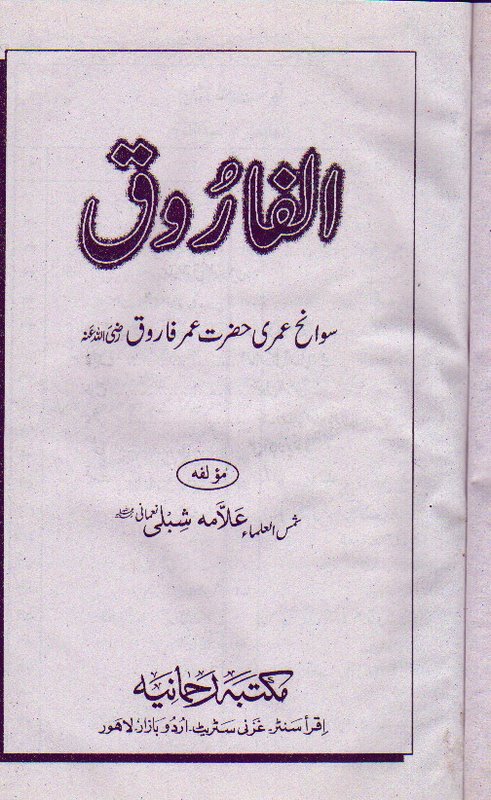
2)al farooq part 1 pg 71 by Molana shibli

عقد الفرید صفحہ نمبر13۔۔۔۔۔۔۔۔۔۔


تاریخ الطبری۔۔۔۔۔۔۔۔۔۔۔۔

حضرت عمر سے شیطان ڈرتا ہے؟

حضرت عمر سے شیطان ڈرتا ہے؟

Umar's Reaction To The Prophet's Death!

Have I got all this right?

On the Prophet's Deathbed, Umar claims that the Prophet is not in a condition to write a will or statement so that the Ummah would not go astray.
We've all probably read this:
Muslim, Volume 7, Book 70, Number 573:

Narrated Ibn 'Abbas:


When Allah's Apostle was on his death-bed and in the house there were some people among whom was 'Umar bin Al-Khattab, the Prophet said, "Come, let me write for you a statement after which you will not go astray." 'Umar said, "The Prophet is seriously ill and you have the Qur'an; so the Book of Allah is enough for us." The people present in the house differed and quarreled. Some said "Go near so that the Prophet may write for you a statement after which you will not go astray," while the others said as Umar said. When they caused a hue and cry before the Prophet, Allah's Apostle said, "Go away!" Narrated 'Ubaidullah: Ibn 'Abbas used to say, "It was very unfortunate that Allah's Apostle was prevented from writing that statement for them because of their disagreement and noise."
I can understand when Sunni brothers say that it was because Umar sincerely cared for the Prophet, that he prevented the Prophet from writing the will, even though i don't agree with it.
Upon hearing the news of the death, Umar is suddenly in denial and completely distraught. He says, "If I hear a man saying that the Prophet is dead, I will strike him with my sword". Didn't people know the Prophet was dying?

Then, Umar informs Abu Bakr all by himself about the meeting at Saqifa. At this point, he has suddenly accepted the Prophet's death. He specifically informs Abu Bakr and no one else, probably because they were good friends. Since this is a matter of Islamic government, and the reason why they quickly felt the need to establish a caliph, I don't see how having that specific friend would matter, since any companion would have done the job, especially since the "closest person to the Prophet " would be in intense grief.

At Saqifah, Umar is in the zone and fought for the rights of the Muhajireen to lead the Ummah. This is coming from a guy who was completely distraught at the news of anybody even uttering the death of the Prophet . Is this behavior normal?


I'm not sure whether Abu Bakr and Umar attended the Prophet's funeral. I've heard both accounts. If someone could shed light on this with valid sources, that would be great.

Abu Bakar & Umar were not present in the Funeral of the Holy Prophet (as)

Abu bakr and Umar were not present in the Funeral of the Holy prophet (as).This is also proved from a Authentic books of ahlul sunna with a Sahih Isnaad

U can see the scan pages with a urdu translation.


Muawiya ka iqrar ke abu bakar aur Umar ne Ali(a.s.) ka Haq Gasb kiya tha!!!(Urdu)

Muawiya Ka Iqrar ke Abu Bakr aur Umar ne Maula Ali(a.s) Ka Haq Gasb Kiya

Reference: Tarikh Ibn Masood

Monday, July 9, 2012

Is it true that Umar, Abu Bakr, Uthman and others were involved in the unsuccessful assassination plot of the Prophet (PBUH & HF)?

This story that some of the companions had planned the assassination of the Prophet (PBUH&HF) is accepted by both Shias and Sunnis, as the Holy Quran says: 

يَحْلِفُونَ بِاللَّهِ ما قالُوا وَ لَقَدْ قالُوا كَلِمَةَ الْكُفْرِ وَ كَفَرُوا بَعْدَ إِسْلامِهِمْ وَ هَمُّوا بِما لَمْ يَنالُوا وَ ما نَقَمُوا إِلاَّ أَنْ
أَغْناهُمُ اللَّهُ وَ رَسُولُهُ مِنْ فَضْلِهِ فَإِنْ يَتُوبُوا يَكُ خَيْراً لَهُمْ وَ إِنْ يَتَوَ لَّوْا يُعَ ذبْهُمُ اللَّهُ عَذاباً أَليماً فِي الدُّنْيا وَ
 . الْخِرَةِ وَ ما لَهُمْ فِي الَْرْضِ مِنْ وَلِ يٍّ وَ لا نَصيرٍّ. التوبه / 47

They swear by Allah that they said nothing (evil), but indeed they uttered blasphemy, and they did it after accepting Islam; and they meditated a plot which they were unable to carry out: this revenge of theirs was (their) only return for the bounty with which Allah and His Messenger had enriched them! If they repent, it will be best for them; but if they turn back (to their evil ways), Allah will punish them with a grievous penalty in this life and in the Hereafter: They shall have none on earth to protect or help them.
9:74

According to Sunni tafsir (commentary), the phrase (وَْ هَمُّوا بِما لَ مْ يَنالُوا ) is about those who plotted to assassinate the Prophet (PBUH & HF) after his return from the Battle of Tabuk.

Baiyhaqi in Dalail al-Nubuwwat and Suyuti in Dur al-Manthur write:

عن عروة قال رجع رسول الله صلى اله عليه وسلم قافلا من تبوك إلى المدينة حتى إذا كان ببعض
الطريق مكر برسول الله صلى الله عليه وسلم ناس من أصحابه فتآمروا أن يطرحوه من عقبة في
الطريق فلما بلغوا العقبة أرادوا أن يسلكوها معه فلما غشيهم رسول الله صلى الله عليه وسلم أخبر
خبرهم فقال من شاء منكم أن يأخذ بطن الوادي فإنه أوسع لكم وأخذ رسول اله صلى الله عليه وسلم
العقبة وأخذ الناس ببطن الوادي الا النفر الذين مكروا برسول اله صلى الله عليه وسلم لما سمعوا ذلك
استعدوا وتلثموا وقد هموا بأمر عظيم وأمر رسول الله صلى اله عليه وسلم حذيفة بن اليمان رضي الله
عنه وعمار بن ياسر رضي اله عنه فمشيا معه مشيا فامر عمارا أن يأخذ بزمام الناقة وأمر حذيفة
يسوقها فبينما هم يسيرون إذ سمعوا وكزة القوم من ورائهم قد غشوه فغضب رسول الله صلى اله
عليه وسلم وأمر حذيفة أن يردهم وأبصر حذيفة رضي الله عنه غضب رسول اله صلى اله عليه وسلم
فرجع ومعه محجن فاستقبل وجوه رواحلهم فضربها ضربا بالمحجن وأبصر القوم وهم متلثمون لا يشعروا
انما ذلك فعل المسافر فرعبهم الله حين أبصروا حذيفة رضي اله عنه وظنوا ان مكرهم قد ظهر عليه
فأسرعوا حتى خالطوا الناس وأقبل حذيفة رضي الله عنه حتى أدرك رسول اله صلى اله عليه وسلم
فلما أدركه قال اضرب الراحلة يا حذيفة وامش أنت يا عمار فأسرعوا حتى استووا بأعلاها فخرجوا من
العقبة ينتظرون الناس فقال النبي صلى اله عليه وسلم لحذيفة هل عرفت يا حذيفة من هؤلاء الرهط
أحدا قال حذيفة عرفت راحلة فلان وفلان وقال كانت ظلمة الليل وغشيتهم وهم متلثمون فقال النبي
صلى الله عليه وسلم هل علمتم ما كان شأنهم وما أرادوا قالوا لا والله يا رسول اله قال فإنهم مكروا
ليسيروا معي حتى إذا طلعت في العقبة طرحوني منها قالوا أفلا تأمر بهم يا رسول اله فنضرب أعناقهم
قال أكره أن يتحدث الناس ويقولوا ان محمدا وضع يده في أصحابه فسماهم لهما وقال اكتماهم.

Baiyhaqi in Dalail al-Nubuwwat narrates from ‘Arora who said: “When the Messenger of Allah (PBUH & HF) was returning to Medina with the believers, from Tabuk, a group of the companions agreed and decided to secretly throw the Prophet (PBUH & HF) off a cliff.

The Prophet (PBUH & HF) realised this betrayal and said: “Whoever wishes to take the route from the desert can do so, because that route is wider and the crowd will be able to pass by easily.” The Prophet (PBUH & HF), however, took the Aqabah route which was on a mountain. When those who intended to assassinate Him heard of this, they covered their faces and were prepared for something great. The Holy Prophet (PBUH & HF) then ordered Hudhayfa bin Imaan and Ammar bin Yasir to follow him. On the way, He asked Ammar to hold the reins of His camel, and ordered Hudhayfa to guide it. They then heard the footsteps of the tribe from behind and were soon surrounded by the hypocrites.

Hudhayfa recognised the Prophet’s (PBUH & HF) anger and tried to chase them away by hitting them with his staff. Although their faces were covered, he recognised the horses these men were on who then realised, through Allah’s intimidation, that their intentions had become apparent to the Prophet (PBUH & HF) and his aides. Terrified, they turned back and hastened into the crowd until they mixed in with the rest of the Muslims.

After this episode, Hudhayfa returned to the Prophet (PBUH & HF) who ordered them to move out of Aqabah and wait for the crowd. The Prophet (PBUH & HF) then asked: “O Hudhayfa! Did you recognise them?” He replied: “I recognised the horses but not those riding them.” The Prophet (PBUH & HF) then asked: “Do you know what their intentions were?” He replied: “I did not understand what they wanted from this.” The Prophet (PBUH & HF) said: “These people had decided to take advantage of the darkness of the night and wanted to throw me off a cliff.” They replied: “O Messenger of Allah! Order your men to behead them!” The Prophet (PBUH & HF) responded: “I do not want people to say that Mohammed accuses his own companions and kills them.” Then the Prophet (PBUH & HF) mentioned the names of those men and ordered: “Assume you did not see this and conceal their identities.”

البيهقي، أبي بكر أحمد بن الحسين بن علي )متوفاي 754 ه(، دلائل النبوة، دلائل النبوة ج 5، ص 652 ، باب رجوع النبي من
تبوك وأمره بهدم مسجد الضرار ومكر المنافقين به في الطريق وعصمة الله تعالى إياه وإطلاعه عليه وما ظهر في ذلك من آثار
النبوة، طبق برنامه الجامع الكبير؛
السيوطي، جلال الدين عبد الرحمن بن أبي بكر )متوفاي 199 ه(، الدر المنثور، ج 7، ص 672 ، ناشر: دار الفكر بيروت – -
.9112

Identities of these individuals are unknown. However, some reliable scholars of the school of Ahl Sunnah like Ibn Hazm al-Andalusi have mentioned the names of these men. In his book called al-Muhali, he writes:

أَنَّ أَبَا بَكْرٍّ وَعُمَرَ وَعُثْمَانَ وَطَلْحَةَ وَسَعْدَ بن أبي وَقَّاصٍّ رضي الله عنهم أَرَادُوا قَتْلَ النبي صلى الله عليه
وسلم وَإِلْقَاءَهُ من الْعَقَبَةِ في تَبُوكَ.

Abu Bakr, Umar, Uthman, Talha, Sa’ad bin Abi Waqas decided to assassinate the Holy Prophet (PBUH & HF), and wanted to push him off a cliff on the way back from Tabuk.

إبن حزم الْندلسي الظاهري، ابومحمد علي بن أحمد بن سعيد )متوفاي 752 ه(، المحلي، ج 99 ، ص 667 ، تحقيق: لجنة
إحياء التراث العربي، ناشر: دار الْفاق الجديدة بيروت؛ –
و دار الفكر، توضيحات: طبعة مصححة ومقابلة على عدة مخطوطات ونسخ معتمدة كما قوبلت على النسخة التي حققها
الْستاذ الشيخ أحمد محمد شاكر.

However, when Ibn Hazm narrated this hadith, the only anomaly he noticed in analysing this hadith was the presence of Walid bin Abdullah bin Jami’ in the chain of narrators. This led him to conclude that the hadith was weak and fabricated.

Here we will inshAllah bring the opinions of the scholars of Rijal and the great men of Ahl Sunna about Walid bin Abdullah to see how correct Ibn Hazm was, in arriving to this conclusion.

When we visit the books of Rijal of Ahl Sunna, we see that many scholars of Ahl Sunna have classified Walid bin Abdullah bin Jami’ as reliable.

Ibn Hajar ‘Asqalani, the great scholar of Ahl Sunna and author of Taqrib al-Tahdhib says:

4751 الوليد بن عبد الله بن جميع الزهري المكي نزيل الكوفة صدوق. -
تقريب التهذيب، ابن حجر، ج 6، ص 642 ، وفات: 456 ، دراسة وتحقيق: مصطفى عبد القادر عطا، چاپ: الثانية، سال چاپ:
9115 م، ناشر: دار الكتب العلمية، بيروت، لبنان، توضيحات: طبعة مقابلة على نسخة بخط المؤلف وعلى تهذيب - 9795
التهذيب وتهذيب الكمال.

Ibn Sa’d in al-Tabaqal al-Kubra says: الوليد بن عبد اله بن جميع الخزاعي من أنفسهم وكان ثقة وله أحاديث.
الطبقات الكبرى، محمد بن سعد، ج 2 ص 257 ، وفات: 622 ، چاپخانه: دار صادر ، بيروت، ناشر: دار صادر، بيروت. -
‘Ajali, in Ma’rifat al-Thiqat, writes: الوليد بن عبد الله بن جميع الزهري مكي ثقة.
معرفة الثقات، العجلي، ج 6 ص 276 ، وفات: 629 ، چاپ: الْولى، سال چاپ: 9725 ، ناشر: مكتبة الدار، المدينة المنورة. -
Razi, in his book al-Jarh wa al-Ta'adil, says:
نا عبد الرحمن نا عبد الله بن أحمد بن محمد بن حنبل فيما كتب إلى قال قال أبى: الوليد بن
جميع ليس به بأس. نا عبد الرحمن قال ذكره أبى عن إسحاق بن منصور عن يحيى بن معين أنه
قال: الوليد ابن جميع ثقة. نا عبد الرحمن قال سئل أبى عن الوليد بن جميع فقال: صالح الحديث. نا
عبد الرحمن قال سألت أبا زرعة عن الوليد بن جميع فقال: لا بأس به.
9156 م، چاپخانه: مطبعة مجلس دائرة - الجرح والتعديل، الرازي، ج 1، ص 4، وفات: 264 ، چاپ: الْولى، سال چاپ: 9249
المعارف العثمانية، بحيدر آباد الدكن، الهند، ناشر: دار إحياء التراث العربي، بيروت، توضيحات: عن النسخة المحفوظة في
كوپريلي ) تحت رقم 644 ( وعن النسخة المحفوظة في مكتبة مراد ملا ) تحت رقم 9764 ( وعن النسخة المحفوظة في مكتبة
.) دار الكتب المصرية ) تحت رقم 416
Mezi, in Tahzibul al-Kimal, writes: قال عبد اله بن أحمد بن حنبل عن أبيه، وأبو داود: ليس به بأس. وقال إسحاق بن منصور، عن يحيى
بن معين: ثقة. وكذلك قال العجلي وقال أبو زرعة: لا بأس به وقال أبو حاتم: صالح الحديث.
24 ، وفات: 476 ، تحقيق: تحقيق وضبط وتعليق: الدكتور بشار عواد معروف، چاپ: – تهذيب الكمال، المزي، ج 29 ، ص 22
9145 م، ناشر: مؤسسة الرسالة، بيروت، لبنان. - الرابعة، سال چاپ: 9722
Dhahabi, who is one of the biggest scholars of Rijal for Ahl Sunna, says: وثقه ابن معين، والعجلي. وقال أحمد وأبو زرعة: ليس به بأس. وقال أبو حاتم: صالح الحديث.
9122 م، - ميزان الاعتدال، الذهبي، ج 7، ص 224 ، وفات: 474 ، تحقيق: علي محمد البجاوي، چاپ: الْولى، سال چاپ: 9246
ناشر: دار المعرفة للطباعة والنشر بيروت لبنان. – -

It is quite interesting to see that Muslim Naishabori, in Sahih Muslim, narrates hadiths from Walid bin Abdullah Jami’ twice – the first time in Volume 5, Page 177 (ذيل باب الوفاء بالعهد ), and the second time in Volume 8, page 123 in the book of (صفات المنافقين و احكامهم ). This implies that in his eyes, Walid was reliable (which is why he narrated hadiths from him). If anyone wishes to claim Walid Bin Abdullah is weak, they should first remove the prefix of “Sahih” from the books of Sahih Muslim.

In conclusion, Walid bin Abdullah Jami’ is reliable, and therefore the aforementioned hadith is also authentic. However, we have not formed an opinion on the quality of the content of the hadith.
This analysis was only done so that we could examine the claim of Ibn Hazm al-Andalusi from the ideology and beliefs of Ahl Sunna scholars.
The onus is now on the scholars of Ahl Sunna who have to answer this topic of why Ibn Hazm al-Andalusi would narrate such a hadith, and then debunk it so unprofessionally.

Why did Lady Fatima (as) stand behind the door even though Imam Ali (as) was present in the house?

The argument usually put forward:

How can we believe that with the presence of Imam Ali (as) inside the house, his wife Fatima (as) will go and open the door? Why didn’t Imam Ali (as) go and open the door himself?

Answer:
First: From some narrations, we understand that Fatima (as) was sitting close to the entrance door of the house, and by seeing Umar and his followers, she (as) closed the door on them.

Al-Ayyashi and al-Mufid have narrated like many others:
“Umar said: ‘Lets us go to him (Ali (AS))’, so then Abu-Bakr, Umar, Uthman, Khalid ibn Al-Walid, Mughira ibn Shu’ba, Abu Ubaida ibn al- Jarrah, Salim Mawla Abu-Hudhayfa and Qunfudh stood up and I stood up with them. As we approached the door Fatima (AS) saw them and she closed the door in their faces and had no doubt they would not enter (the house) without her permission. Umar then kicked and broke down the door with his leg, which was made of date (tree) branches. Then they entered the house, and brought Ali (as) out while holding him by his neck...” [1]
1.Al-Ayyashi, Tafsir al-Ayyashi, vol. 2, p. 67,Al-Mufid, al-Ikhtisas, p. 186, Al-Majlesi, Bihar al-Anwar, vol. 28, p. 227
Sulaim ibn Qays narrates that:
“Then Umar reached the house of Ali (as), and Fatima (as) was sitting behind the door. She had tied a piece of cloth to her head and had lostmuch weight due to the tragic loss of the Messenger of Allah (PBUH&HF). Umar came forward and knocked on the door and cried ‘Oh Son of Abu Talib (as) [open the door]’. Fatima (as) replied: ‘O Umar! What do you want from us? Leave us with the tragedy which has fallen upon us.’ Umar said: ‘Open the door else I will set it on fire on to you!’ Fatima (as) said: ’Oh Omar, do you not fear Allah the Almighty? You want to enter my house and attack my home?” Umar declined to back off, instead he asked for fire then set the door alight till it burnt down.”[2]
2. Sulaim ibn Qays, Kitab Sulaim ibn Qays, p.864

Second: Fatima (AS) had no doubt that they wouldn’t enter the house without permission because this is the order of Allah in the Holy Quran:
“O you who believe: Do not enter houses other than your own houses until you have asked permission and said hello (Salam) to the household, that is better for you so you may remember.
But if you do not find any one therein, then do not enter them until permission is given to you, and if it is said to you: ‘Go back’, then go back for this is purer for you, and Allah is aware of what you do.”
Quran 24:27-28

On the other hand the houses of the Prophet (PBUH&HF) have a special rank, and no one is allowed in them without asking permission:
“O you who believe! Do not enter the houses of the Prophet unless permission is given to you...”
Quran 33:53

الحزاب 35 » يا أَي هَُّا الَّذينَ آمَنُوا ل تَ دخُلُوا ب يُوتَ النَّبِيِّ إِل أَ ن ي ؤذَنَ لَكُم «

There is no doubt that the house of Fatima (as) is regarded as one of the houses of the Holy Prophet (PBUH&HF). This fact has been mentioned in many different Sunni Tafsir books under the commentary of the following Holy Verse:
“In houses which Allah has permitted to be raised and His name be mentioned in them, they glorify Him therein in the mornings and the evenings.”
Quran 24:36

النور/ 63 » فِى ب يُوتٍ أَذِنَ اللَّو أَن تُ رفَعَ وَ يُ ذكَرَ فِيهَا ا سمُو يُسَبِّحُ لَو فِيهَا بِال غُدُوِّ وَا لَْصَالِ
 «

Suyuti and others have narrated on from the Holy Prophet (PBUH&HF) that the house of Imam Ali and Fatima (as) is one of the greatest house of the Prophets:

Ibn Mardawayh has narrated from Anas ibn Malik and Buraida that:
“Allah’s Messenger (PBUH&HF) recited this verse ‘In houses which Allah has permitted to be raised…’ and someone asked ‘Which houses are those, Oh Messenger of Allah?’ He (PBUH&HF) said: ‘The houses of the Holy Prophets (PBUT)’. Abu-Bakr then said: ‘Is this house one of them?’, (pointing to) the house of Ali and Fatima (as). To which the Prophet (PBUH) replied: ‘Yes, it is amongst the greatest of them.’” [3]

3.Al-Suyuti, al-Dur Al-Manthoor, vol. 6, p. 203,Al-Tha’labi al-Nisaburi, al-Kashf Wal-Bayan, vol.7, p.107
Al-Tha’alibi, Tafsir al-Jawahir al-Hisan, vol. 7, p. 107,Al-Aloosi, Tafsir Rooh al-Ma’ani, vol. 18, p.174

Furthermore, it was thought that by acknowledging the stature and position of Fatima (as) and the respect for the Holy Prophet (PBUH&HF), people would be ashamed to face Fatima (as) and would stop their aggression, just like some people who retreated after hearing the voice of Fatima (as):

“Umar came towards the house of Fatima (as) and a group of men were accompanying him. They then knocked on the door. Upon hearing their voices, Fatima (as) cried with tears and said with a loud voice ‘Ya Rasul Allah (O Messenger of Allah)! (How difficult) are the oppressions we face from the son of Khattab (Umar) and the son of Abu-Quhaafa (Abu-Bakr) after you passed away’. In hearing Fatima’s (as) grief stricken cries, some changed their minds and left with tears whilst their -hearts were about to be broken and their livers be cut in half*-, however Umar remained with a group of people.” [4]
4.Al-Dinawari, al-Imama Wal-Siyasa, vol. 1, p. 16
*This is used by Arabs to show a state of extreme emotional pain and grief
Therefore, by seeing Umar and his followers, Fatima (as) closed the door and stood behind it. She (as) never thought that they would enter without permission and with her presence.
It was these attackers who disgracefully and shamelessly disrespected the House and those inside it.

The wives of the Holy Prophet (PBUH&HF) and opening the door for non - mahrams ( :( غیر ذی محر م

The best way to refute the arguments put forward regarding the topic being discussed, is by seeing the actions of the Holy Prophet (PBUH&HF). It has been mentioned in many Shia and Sunni sources, that sometimes the Holy Prophet (PBUH&HF) would allow His wives to open the door for non-mahrams.

Umme Salma:
According to Alqama, Umme Salma opened the door for Imam Ali (as):
“Allah’s Messenger left the house of Zainab bint Jahsh and entered the house of Umm Salma, as that day was her turn. After a short while, Ali (as) arrived and slowly knocked on the door. Hearing this, Allah’s Messenger (PBUH&HF) woke up but Umme Salma hadn’t noticed (the knock on the door).The Holy Prophet (PBUH&HF) then said to her: ‘Go and open the door for him.’” [5]
5. Ibn Asakir, Tarikh Madinat al-Dimashq, vol. 42, p.470,Al-Raafi’i al-Qazwini, Al-Tadwin Fi Akhbar Qazwin, vol. 1, p.89

Aisha:
It has been narrated that Aisha opened the door for Imam Ali (as) by the order of the Holy Prophet (PBUH&HF). Imam al-Sadiq (as) narrates from his father who narrated from his fathers that Amir al-Mu’minin Ali (as) said:
“I was with the Prophet Mohammad (PBUH) in the mosque after we had prayed the morning prayers. He rose to leave so I left with him. If He was to go somewhere He would inform me and if he came back late, I would go look for him as my heart could not bear to be away from Him, even for an hour. He said to me: ‘I will go to the house of Aisha’, and I went to Fatima’s house and we were happy alongside Hassan and Hussein (as). I then went to the house of Aisha and knocked on the door. She said: ‘Who are you?’ I answered: ‘Ali (as).’ She said: ‘The Prophet (PBUH&HF) is asleep.’ I went away. After a while I thought to myself (how can) the Prophet (PBUH&UF) be asleep while Aisha is present in the house. So I returned and knocked on the door again. She asked again: ‘Who are you?’ I said: ‘Ali’. She said: ‘The Prophet (PBUH&HF) is busy’. I hesitated because I was embarrassed* to knock on the door again but I felt I couldn’t bear being away from Him (PBUH&HF), so I returned and knocked hard on the door. Aisha Said: ‘Who are you?’ I answered: ‘Ali’.
Then I heard the voice of Allah’s Messenger (PBUH&HF) saying: ‘Oh Aisha, open the door for him’. She opened the door and I went in…” [6]

6.Al-Tabresi, al-Ihtijaj, vol. 1, p. 292-293,Al-Majlesi, Bihar al-Anwar, vol. 38, p. 348
*The word مستحییا has been used.
The above narrations from both Shia and Sunni books were presented as examples. In these narrations although the Holy Prophet (PBUH&HF) himself was in the house he allowed his wives to open the door for non-mahram men. This attitude shows that doing so does not have a problem if it is performed in accordance with Islamic laws.

Thus we can conclude that Fatimah (as) didn’t go behind the door to open it. Rather, she was already standing beside it and when she saw Umar and his followers approaching, she went inside the house and closed the door. Even if we ‘assume’ that Fatima (as) did indeed go to open the door, there will be no problem with her doing this because the Prophet (PBUH&HF) himself had ordered his wives to do the same thing in some occasions.

Why didn’t Imam Ali (as) react when he witnessed his wife being attacked by Umar & Co.?

The argument usually put forward:

How could Imam Ali (as), the one dubbed the “Lion of Allah” who single-handedly removed the Gate of Khaibar, witness his wife (as) being attacked, and not react?

Answer:
In order to deny the attack of Umar b. Khattab on Lady Fatima (as) and her household, Sunnis have put forward many baseless arguments. One of the most common arguments they use is something like this:

“Will a Muslim who is witnessing his wife being attacked show no reaction and just watch the assailants and allow them to do what they want? Especially someone like Amir al-Mu’minin who was the “lion of Allah” and showed much heroism in the wars he fought! We cannot accept the fact that Umar attacked Lady Fatima because if he had, Ali (as) would have stopped him and confronted him. History shows that such a confrontation never occurred!”

Shia scholars throughout history have repeatedly shown that this argument is baseless and Imam Ali (as) had reacted very strongly.


The strong reaction of Amir al-Mu’minin Ali (as) against Umar ibn Khattab
When Umar and co. attacked the house, Amir al-Mu’minin Ali (as) showed strong reactions and stood up against Umar. He threw him on the floor and punched him in the face and neck. However, since Imam Ali (as) was ordered to be patient, he stopped and chose the path of patience, just as the Messenger of Allah (s) had ordered him. Imam Ali (as) wanted to show them that if he (as) had not been ordered to be patient, and if the order of Allah was other than this, no one could even consider doing such a thing to the Ahl al-Bait (as). Nevertheless, Imam Ali (as), as always, obeyed the divine orders.

Regarding this event, Sulaim b. Qays al-Hilali who was one the greatest companions of Amir al-Mu’minin (as) writes the following:

“Umar asked for fire and set the door on fire. He then pushed the door and went in. Fatima (as) confronted Umar and shouted: ‘Ya Abata! Ya RasulAllah! (Oh father! Oh messenger of Allah!).’ Umar raised his sword while it was in its sheath and hit Fatima (as) on her side. She cried: ‘Ya Aabta! (Oh father).’ Umar raised his whip and hit Fatima’s (as) arm with it.

She (as) wailed: ‘Ya RasulAllah! (Oh messenger of Allah!) How evil are Abu-Bakr and Umar (acting) after you have left!’

Ali (as) jumped up and grabbed Umar by the collar while pulling him by force. He then threw him on the floor and hit him on the nose and neck, wanting to kill him. However, He (as) remembered the order of the messenger of Allah (s) and his will and said: ‘O son of Sahhak! I swear by the one who gave Muhammad (s) high stature by assigning him as a Prophet, if it was not because of what Allah had destined, and the covenant between the Prophet (s) and me, you would have known that you couldn’t enter my house!’”
[1]
1. Sulaim b. Qays, The book of Sulaim, p.568
Aloosi the famous Sunni interpreter (mufassir) mentions the following from Shia sources:

“Umar got angry and set fire to the door of Ali’s (as) House and entered. Fatima (as) confronted Umar and cried: ‘Ya Aabta! Ya RasulAllah! (Oh father, Oh Messenger of Allah).’ Umar raised his sword while it was in its sheath and hit Fatima (as) on her blessed side and then raised his whip and struck her arm. She cried again: ‘Ya Abta!’ (By seeing this) Ali (as) grabbed Umar by his collar and forcefully threw him to the floor then hit him on the nose and neck.” [2]
2.Al-Aloosi, Tafsir Rooh al-Ma’ani, vol. 3, p.124

Ali and his Submitting to the will of The Prophet (s)
Imam Ali (as) was obedient to the divine orders throughout his life and all of his actions and behaviors were based on divine order. He had never reacted to any situation as a result of prejudice, anger or self-profit. Imam Ali (as) was ordered by Allah and The Messenger (s) to be patient in confronting these great tragedies, therefore, he did what he was ordered and didn’t unleash his sword. Below we will show a few narrations which directly mention the Prophet’s (s) orders to Imam Ali (as) to have patience regarding the events which would happen when he passed away.

Sayyid al-Radi (the author of Nahj al-Balagha) narrates in his book Khasa’is al-A’imma from Imam al-Kazim (as), that he asked his father Imam al-Sadiq (as): “What happened after the Prophet (s) gained consciousness?” Imam al-Sadiq (as) had answered:

“The women entered while crying and wailing. The Muhajirin and Ansar gathered behind the door and screamed with grief. Suddenly the Prophet (s) asked: ‘Where is Ali?’ Ali (as) came forward and entered. Ali (as) said: ‘I entered and hugged the Prophet (s).’ He said to me: ‘My Brother… these people will leave me and they will be busy with their affairs. The example of you is like the Ka’ba which Allah has made a sign so that people would come to it from deep valleys and faraway places, but the Ka’ba does not go to those places. I swear by Him who has sent me (as a Prophet), I warned them of great punishments after I informed each one of those men about your rights and I committed them to obey you and they all answered (positively)and submitted to you, but I definitely know they will act the opposite of what they have pledged. Once I leave this world and you have acted upon my will and placed my body in the grave, stay in your House until you compile the Holy Quran... Have patience regarding what will befall on you and her (Fatima) (as) until you meet me.’” [3]
3.Al-Radi, Khasa’is al-A’imma, p. 73
Al-Majlesi, Bihar al-Anwar, vol. 22, p. 474
Sulaim b. Qays also narrates:

“The Prophet (s) then looked at Fatima (as), her husband and her two sons and said: ‘O Salman! I hold Allah as witness that I am at war with those who are at war with them, and have peace with those who are at peace with them. They will be in heaven with me.’ Then the Prophet (s) turned towards Ali (as) and said: ‘O Ali! Soon after me you will be troubled by the Quraish and their unity and tyranny against you. If you find supporters, then rise in jihad against them and with your followers fight with those who oppose you. If you do not find supporters, then pause and be patient. Do not destroy yourself by your own hands. Your position with respect to me is like that of Aaron (Harun) to Moses (Musa). Aaron (Harun) is a good example for you. He said to his brother Moses: ‘The people considered me weak and nearly killed me (Quran 7:150).’” [4]
4.Sulaim b. Qays, The book of Sulaim, p.569

We also mentioned in the first narration that Imam Ali (as) said to Umar:

“If it was not because of what Allah had destined, and the covenant between the Prophet (s) and me, you would have known that you couldn’t enter my house” [5]
5. Sulaim b. Qays, The book of Sulaim, p.568
The narrations regarding this matter are abundant and it is not possible to include them in this short article; therefore we will rely on these few narrations for now.
Truly, who but Imam Ali (as) can emerge successful from such a test? The value of his actions can only be understood when we realize that this is the same Imam Ali (as) who bravely fought against the enemies of Islam and the disbelievers like a Lion. One day he was winning over the Arab hero Amr b. Abdu-Wud and another he was splitting the head of the Jewish champion Marhab through his helmet. One day, Allah orders that the Dhulfaqar must be the nightmare of the disbelievers, and another, He orders that the same Dhulfaqar must stay in its sheath to preserve the foundations of Islam from its enemies.

The Possibility that Amir al-Mu’minin and Lady Fatima (as) could have been killed if Ali (as) reacted more harshly
Although defending ones family from enemies is one of the obligations that all men have, sometimes it is necessary that one controls himself in situations where the enemy is making provocative moves, to prevent the opponent from reaching his objectives.
If Imam Ali (as) had used his sword on those who attacked his house, he would have given them a good excuse to kill him. There was the possibility that in between this, Lady Fatima (as) would have also been martyred, causing their enemies to spread rumors that Imam Ali (as) sacrificed his wife in order to reach worldly powers. Then they could have easily labeled Imam Ali (as) as the killer of Lady Fatima (as), the exact plot they used on Ammar, the loyal Companion of Imam Ali (as):

When the Prophet (s) was building the Mosque of Medina, Ammar would bring two bricks at a time for building while others would only bring one. When the Prophet (s) saw this, he removed the dust from Ammar’s face with his own hands and said:
"Mercies be upon Ammar, he will be killed by a rebellious aggressive group. Ammar will invite them to Heaven and they will invite him to Hell.” [6]
6.Al-Bukhari, Sahih al-Bukhari, vol. 3, p. 1035, no.2657
English translation of Sahih Bukhari, Vol. 4, Book 52, No. 67, Available Online
Everyone was aware that the Prophet (s) had said this and when Ammar was killed by Muawiya’s people in the battle of Seffin it was clear for everyone that Muawiya and his people were the “rebellious aggressive group”. Ahmad b. Hanbal narrates the solution Muawiya came up with:

“When Ammar b. Yasir was martyred, Amr b. Hazm went to Amr b. al-Aas and said: ‘Ammar has been killed and the Messenger of Allah (s) had said: ‘A rebellious, aggressive group will kill Ammar.’’ Amr b. al-Aas stood up very frightened. He then started saying ‘we belong to Allah and to Him we will return’ until he reached Muawiya. Muawiya asked: ‘What do you want?’ He said: ‘Ammar has been killed.’ Muawiya said: ‘So what that Ammar has been killed!’ Amr replied: ‘I heard the Messenger of Allah (s) say: ‘A rebellious aggressive group will kill Ammar.’ Muawiya said: ‘May you fall in your urine if we killed him! Ali and His men killed Ammar. They brought him here and placed him between our swords and spears!’” [7]
7.Ahmad ibn Hanbal, Musnad Ahmad, vol. 4, p. 199, No. 17813
Al-Bayhaqi, Sunan Al-Bayhaqi Al-Kubra, vol. 8, p. 189
Al-Dhahabi, Tarikh al-Islam, vol. 1, p. 420 & 426
Al-Haakim Al-Nisaburi narrates this narration then says:

“This Hadith is authentic based on the criteria of Bukhari and Muslim, but they have not narrated it like this.” [8]
8.Al-Hakim al-Nisaburi, al-Mustadrak, vol. 2, p. 155
Al-Munawi narrates the following regarding the narration about Ammar’s death:
“This narration is amongst the strongest and most authentic narrations. Since Muawiya couldn’t deny it, he said: ‘He who had brought Ammar with him has killed him.’ Ali (as) replied like this: ‘(If so) then Hamza was also killed by the Prophet (in the battle of Uhud), because it was he who took Hamza with him.’

Ibn Dahiyya says: ‘This answer of Ali (as) is so strong that it leaves no room for an answer and it is a reasoning that prevents any objection.” [9]
9.Al-Munawi, Faid al-Qadir Sharh al-Jami al-Saghir, vol. 6, p. 366

Imam Ali (as) made the best decision
Amir al-Mu’minin (as) had to choose between saving Islam and sacrificing his rights for it; or fighting with that small group and killing them but allowing the enemies of Islam and the hypocrites, to take advantage of the situation and put Islam in danger. Amir al-Mu’minin (as) chose the second option and with this sacrifice he prevented the enemies of Islam from destroying it and shattered their hopes. This was surely the most logical choice.
Regarding this matter Imam Ali (as) says himself:
“Then I began to wonder whether I should rise against them without supporters or endure the blinding darkness in which the grownups become weak and the young become old and the true believer is tormented till he meets Allah (on his death). I found that enduring these was wiser. So I adopted patience although I felt as if ‘there was dirt in the eye and suffocation in the throat’*. I watched my inheritance being looted...” [10]
*Used to show extreme hardship or torment
10. Sayyid al-Radi, Nahj al-Balagha, Sermon No. 3
Furthermore, when Abu-Sufyan – a man who used every opportunity for his own advantage – came to Him and offered his support to fight against Abu Bakr, Imam Ali (as) delivered a sermon and said:
“O People! Disrupt the waves of mischief by the ships of deliverance…, Prosperous is he who rises with wings (of power and defeats the enemy) or else he remains peaceful and others enjoy ease…, If I speak out they would call me greedy towards power and if I keep quiet they would say he was afraid of death. It is a pity that after all the ups and downs (I have been through they would say such things). By Allah the son of Abu-Talib (as) is fonder of death than an infant is of the breast of its mother. Verily I have hidden knowledge that if I disclose, you will start trembling like ropes hanging in deep wells.” [11]
11.Sayyid al-Radi, Nahj al-Balagha, Sermon No. 5

 Why didn’t the Prophet (s) defend Summaya and the other Women of Islam?
The way Imam Ali (as) reacted was exactly like how the Prophet had reacted in the beginnings of Islam when Muslims were weak and had no means of defending themselves.
Ibn Hajar al-Asqalani writes:
“Summaya the daughter of Khabbat was the Mother of Ammar b. Yasir. She was the seventh person who accepted Islam. Abu-Jahl tortured her andrepeatedly stabbed her below her abdomen until she was martyred. She was the first martyr lady of Islam… The tribe of Bani-Mughayra tortured her because she had become Muslim and was not willing to give it up. The Messenger of Allah would pass by Ammar, his mother and his father (Yasir) while they were being tortured in a place near Mecca and would say to them: ‘O family of Yasir! Be patient for our meeting place is Paradise.’” [12]
12.Ibn Hajar al-Asqalani, Al-Isaaba Fi Tamyeez Al-Sahaba, vol. 7, p. 712
Although the Messenger of Allah (s) witnessed a kafir like Abu-Jahl torturing the women of Islam, he did not show any reactions and only ordered them to be patient. Why didn’t the Prophet (s) who was the bravest and most sympathetic man in the world, not defend Summaya? Why didn’t He unleash his sword and cut off Abu-Jahl’s head?
Why didn’t the Prophet (s) interfere and show any reaction when Umar b. Khattab would torture the women of Islam and would beat them up for accepting Islam? Why didn’t he stop him because of these actions:

Ibn Hisham in Sirat al-Nabawiyya writes:
“Abu-Bakr came across a Muslim slave girl who belonged to Bani-Muammil who were (people) from the tribe of Uday b. Ka’b. Umar was beating her so that she would renounce Islam and it was in those days that Umar was still a polytheist (mushrik). He beat her up until he became tired! and said: ‘I have an excuse for not beating you, it is because I am tired!!!’ The slave said in return: ‘May Allah treat you the same way.’” [13]
13. Al-Humayri, al-Seerat al-Nabawiyya, vol. 2, p. 161
Ahmad ibn Hanbal, Fada’il al-Sahaba, vol. 1, p. 120
Al-Kala’i, al-Iktifa Bima Tadammunahu Min Maghazi Rasool Allah Wal Thalathat al-Khulafa’, vol. 1, p. 238
Al-Ansari al-Tilmisani, al-Juwhara Fi Nasab al-Nabi Wa As’habihi al-Ashara, vol. 1, p. 244
Al-Tabari, Ahmad, al-Riyad al-Nadira Fi Manaqib al-Ashara, vol. 2, p. 24
Al-Nuwayri, Nihayat al-Arb Fi Funoon al-Adab, vol. 16, p. 162

Whatever answer Sunnis have regarding the patience of the Prophet (s) and him doing nothing when the Muslim women were being beaten up or killed, we will use the same answer for the patience of Amir al-Mu’minin (as).

Extracted from .....http://www.valiasr-aj.com/fa/page.php?bank=question&id=6015............
 

Sunday, July 8, 2012

The abuse and oppression of a pregnant Lady Fatima at the hands of Umar

http://www.valiasr-aj.com/fa/page.php?bank=maghalat&id=142
The abuse and oppression of a pregnant Lady Fatima at the hands of Umar, as confessed by Ibn Abi Darim
Argument:
In the book Mizan al-‘Itidal, Allama Sham sul-Deen Dhahabi brands Ibn Abi Darim as a Rafidhi. Dhahabi claims that despite the staunch convictions of Darim, he nonetheless slandered the Shaikhin(Abu Bakr and Umar) during the latter stages of his life, hence dismissing him as a valid narrator.
Analysis
The original narration:
Alama Sham sul-Deen Dhahabi in Siyar a`lam al-nubala' and Mizan al-'Itidal and Ibn Hajar ‘Asqalani in Lisan al-Mizan narrated from Ibn Abi Darim:
إنّ عمر رفس فاطمة حتّى أسقطت بمحسن.
Umar kicked Hazhrat Fatima, causing the miscarriage of her unborn baby, Muhsin.
، الذهبي، شمس الدين محمد بن أحمد بن عثمان، )متوفاي 847 ه( ميزان الاعتدال في نقد الرجال، ج 1، ص 372
تحقيق: الشيخ علي محمد معوض والشيخ عادل أحمد عبدالموجود، ناشر: دار الكتب العلمية بيروت، الطبعة: الأولى، 1991 م؛ -
Al Thahabi Shams Al Deen Muhammad Bin Ahmad Bin Uthmaan (died 748 H), book: Meezaan Al I’tadaal fi Naqd Al Rijaal (The Scale of Moderation in Criticizing The Men of Narration), volume 1, page 283, investigated by Sheikh Ali Muhammad Mu’awwad and Sheikh Aadel Ahmad Abdul Mawjood, publisher: Daar Al Kutub Al ‘Ilmiyya, Beirut, first edition, 1995;
الذهبي، شمس الدين محمد بن أحمد بن عثمان، )متوفاي 847 ه(، سير أعلام النبلاء، ج 11 ، ص 187 ، تحقيق: شعيب
الأرناؤوط، محمد نعيم العرقسوسي، ناشر: مؤسسة الرسالة بيروت، الطبعة: التاسعة، 1412 ه؛ -
Al Thahabi, Shams Al Deen Muhammad Bin Ahmad Bin Uthmaan (died 748 H), book: Siyar A’laam Al Nubalaa’ (The Lives of the Knowledgeable Nobles), volume 15, page 578, investigated by Shu’ayb Al Arnaa’oot, Muhammad Naeem Al Aariqsoosi, publisher: Mu’assasat Al Risaala (The Message Foundation), Beirut, ninth edition, 1413 H;
العسقلاني الشافعي، أحمد بن علي بن حجر أبو الفضل )متوفاي 713 ه( لسان الميزان، ج 1، ص 367 ، تحقيق: دائرة
المعرف النظامية الهند، ناشر: مؤسسة الأعلمي للمطبوعات بيروت، الطبعة: الثالثة، 1446 ه 1976 م. – - -
Al Asqalaani Al Shaafii, Ahmad Bin Ali Bin Hijr Abu Al Fadil (died 852 H), Lisaan Al Meezaan (The Scale’s Tongue), volume 1, page 268, investigated by Al Maarifa Al Nithaamiyya Center, India, publisher: Mu’assasat Al A’lami Lilmatboo’aat (Al A’lami Foundation for Print), Beirut, third edition, 1406 H (1986 AD);
Dhahabi, Mizan al-'Itidal fi Naqd al-Rijal, Volume 1, Page 283
Dhahabi, Siyar a`lam al-nubala', Volume 15, Page 578
Ibn Hajar Asqalani, Lisan al-Mizan, Volume 1, Page 268
However, as already mentioned, Dhahabi and Ibn Hajjar have rejected this notion on grounds of its source, Ibn Abi Darim.
احمد بن محمد بن السرى بن يحيى بن أبي دارم المحدث أبو بكر الكوفي الرافضي الكذاب... ثم
في آخر أيامه كان أكثر ما يقرأ عليه المثالب حضرته ورجل يقرأ عليه ان عمر رفس فاطمة حتى أسقطت
بمحسن.
During the end of his life, Darim made an effort to shed light on the numerous flaws and misgivings of the Shaikhin. I was in his presence during which I witnessed a man telling him, “Umar kicked Lady Fatima, causing the miscarriage of Muhsin.”
By analyzing the scholarly reputation and character of Ibn Abi Darim, one will come to understand that the only reason for his rejection by the Ahl Sunna is in regards to this hadith. As a matter of fact, prior to this hadith, he was considered as one of the most knowledgeable ulama of the Ahl Sunna. Dhahabi described him as a “leader(Imam), memorizer(Hafiz), and an erudite(Fadhil).”
ابن أبي دارم. الامام الحافظ الفاضل، أبو بكر أحمد بن محمد السري بن يحيى بن السري بن أبي
دارم....
Ibn Abi Daarim. The virtuous memorizer imam, Abu Bakr Ahmad Bin Muhammad Al Sirriy Bin Yahyaa Bin Al Sirriy Bin Abi Daarim…
He continues as: كان موصوفا بالحفظ والمعرفة إلا أنه يترفض.
His knowledge and character were exceptional, but he was attached to Shiaism.
And he also says: وقال محمد بن حماد الحافظ، كان مستقيم الامر عامة دهره.
Muhammad bin Hammaad Al Haafith said: In his lifetime he was firm in his beliefs.
الذهبي، شمس الدين محمد بن أحمد بن عثمان، )متوفاي 847 ه(، سير أعلام النبلاء، ج 11 ، ص 188  189 ، تحقيق:
شعيب الأرناؤوط، محمد نعيم العرقسوسي، ناشر: مؤسسة الرسالة بيروت، الطبعة: التاسعة، 1412 ه. -
Al Thahabi, Shams Al Deen Muhammad Bin Ahmad Bin Uthmaan (died 748 H), book: Siyar A’laam Al Nubalaa’ (The Lives of the Knowledgeable Nobles), volume 15, page 577-579, investigated by Shu’ayb Al Arnaa’oot, Muhammad Naeem Al Aariqsoosi, publisher: Mu’assasat Al Risaala (The Message Foundation), Beirut, ninth edition, 1413 H.
In a hadith linked to Ibn Abi Darim, the Holy Prophet (PBUH&HF) says:
الحلال بين، والحرام بين، وبين ذلك مشتبهات لا يعلمها كثير من الناس. من ترك الشبهات استبرأ
لدينه وعرضه، ومن وقع في الشبهات، وقع في الحرام كالراعي إلى جنب الحمى، يوشك أن يواقعه.
The border between Halal and Haram is clear, but between them, people face many doubts and unknowns. Whoever forsakes these doubts has saved his religion and beliefs, and whoever embraces them has committed sin, similar to an individual in the company of an ill person.
Dhahabi, after narrating this Hadith, says: الحديث. متفق عليه.
This Hadith is reliable and agreed upon.
الذهبي، شمس الدين محمد بن أحمد بن عثمان، )متوفاي 847 ه(، سير أعلام النبلاء، ج 11 ، ص 188 ، تحقيق: شعيب
الأرناؤوط، محمد نعيم العرقسوسي، ناشر: مؤسسة الرسالة بيروت، الطبعة: التاسعة، 1412 ه؛ -
Al Thahabi, Shams Al Deen Muhammad Bin Ahmad Bin Uthmaan (died 748 H), book: Siyar A’laam Al Nubalaa’ (The Lives of the Knowledgeable Nobles), volume 15, page 577, investigated by Shu’ayb Al Arnaa’oot, Muhammad Naeem Al Aariqsoosi, publisher: Mu’assasat Al Risaala (The Message Foundation), Beirut, ninth edition, 1413 H.
Having said this, interestingly, then Dhahabi makes the following disparaging remarks about Darim:
شيخ ضال معثر.
A misguided old man!
Hence, is it possible for someone labeled as “Leader, memorizer, and scholar,” who has maintained a firm belief during his entire life, to be also classified as misguided and evil?
How can such contrasting words be applied to the same person?
Yes, exaggeration of the merits of the Khalifahs will cause a prominent figure of Ahl Sunnah, such as Dhahabi, to contradict himself.
Therefore, we should ask:
Is it valid to reject the narrations of an individual because he is a Rafidhi?
What type of logic gives us the permission to reject someone simply because of his inclination to Shiaism? If such is the standard, then Ahl Sunna need to dismiss many hadiths in Siha Sitta (the six hadith books) as they contain numerous hadiths from Rafidhis. InshaAllah, we will mention a few examples:
1. ‘AbiduAllah bin Musa:
Dhahabi says about him:
قال ابن مندة كان أحمد بن حنبل يدل الناس على عبيد الله وكان معروفا بالرفض لم يدع أحدا
اسمه معاوية يدخل داره.
Ibn Manda said: Ahmad bin Hanbal would welcome people to his premises, as he was a well-known Rafidhi, but he did not allow anyone by the name of “Muawia” to enter his residence.
الذهبي، شمس الدين محمد بن أحمد بن عثمان، )متوفاي 847 ه(، سير أعلام النبلاء، ج 9، ص 116 ، تحقيق: شعيب
الأرناؤوط، محمد نعيم العرقسوسي، ناشر: مؤسسة الرسالة بيروت، الطبعة: التاسعة، 1412 ه. -
Al Thahabi, Shams Al Deen Muhammad Bin Ahmad Bin Uthmaan (died 748 H), book: Siyar A’laam Al Nubalaa’ (The Lives of the Knowledgeable Nobles), volume 9, page 556, investigated by Shu’ayb Al Arnaa’oot, Muhammad Naeem Al Aariqsoosi, publisher: Mu’assasat Al Risaala (The Message Foundation), Beirut, ninth edition, 1413 H.
He continues to write:
وحديثه في الكتب الستة.
His Hadiths are present in the books of Siha Sitta
Mezi, the author of Tahzib al-kamal, states that all the books of Siha Sitta contain hadiths from Hanbal:
عُبَيد الله بن موسى بن أَبي المختار، واسمه باذام العبيسي، مولاهم أبو محمد الكوفي.
رَوَى عَن: إبراهيم بن إِسماعيل بن مجمع )ق(، وأسامة بن زيد الليثي )م(، واسرائيل بن يونس )خ
م ت س(، وإسماعيل بن أَبي خالد )خ(....
Ubaid Allah Bin Musaa bin Abi Al Mukhtaar, and his name Baathaam Al ‘Ubaisi, Their Chief Abu Muhammad Al Koofi.
Narrated according to: Ibraaheem Bin Ismaaeel Bin Majmaa (in Qazwini), ans Usaama Bin Zaid Al Laithiy (in Muslim), and Israa’eel Bin Yunis (in Bukhari, Muslim, Tirmithi, and Nisa’i), and Ismaaeel Bin Abi Khaalid ()…
المزي، يوسف بن الزكي عبدالرحمن أبو الحجاج )متوفاي 843 ه(، تهذيب الكمال، ج 19 ، ص 164 ، تحقيق د. بشار عواد
معروف، ناشر: مؤسسة الرسالة بيروت، الطبعة: الأولى، 1444 ه 1974 م. – -
Al Mazi, Yusuf Bin Al Zaki Abdul Rahmaan Abu Al Hijaaj (died 742 H), book: Tahtheeb Al Kamaal, Volume 19, page 164. Investigated by Dr. Bashaar Awaad Maaroof, publisher: Mu’assasat Al Risaala (The Message Foundation), Beirut, first edition, 1400 H (1980 AD).
رمزهايى كه در بين پرانتزها گذاشته شده، هر كدام مخفف اسم يكى از نويسندگان صحاح سته
است. )خ( = بخاري؛ )م( = مسلم؛ )ق( = ابن ماجه قزويني؛ )ت( = ترمذى )س( = نسائي.
Each code between brackets represents the name of the authors of the Siha Sitta:
(خ) = Bukhari
(م) = Muslim
(ق) = Ibn Majah Qazwini
(ت) = Trimidhi
(س) = Nisa’i
2. Ja’far bin Sulaiman al-Dhab’i:
The scholars of Ahl sunna view him as a Rafidhi as well. Khatib Baqdadi narrates from Zaid bin Zari’ who said:
فان جعفر بن سليمان رافضي.
Ja’far bin sulaiman was a Rafidhi.
البغدادي، أحمد بن علي أبو بكر الخطيب )متوفاي 462 ه(، تاريخ بغداد، ج 1، ص 164 ، ذيل ترجمه أحمد بن المقدام بن
سليمان، رقم 3931 ، ناشر: دار الكتب العلمية بيروت. -
Al Baghdaadi, Ahmad Bin Ali Abu Bark Al Khateeb (died 463 H), book: Taareekh Baghdaad (The History of Baghdaad), volume 5, page 164, in the footnote of Ahmad Bin Al Miqdaam Bin Sulaimaan’s translation, no. 2925, publisher: Daar Al Kutub Al ‘Ilmiyya, Beirut.
Mezi states that Bukhari (in Al-Adaabul Mufrad) and the other authors of Siha (meaning Muslim, Abu Dawood, Tirimidhi, Nisa’I and Ibn Majah) have narrated hadiths from this person.
روى له البخاري في "الأدب"والباقون.
المزي، يوسف بن الزكي عبدالرحمن أبو الحجاج )متوفاي 843 ه(، تهذيب الكمال، ج 1، ص 14 ، تحقيق د. بشار عواد
معروف، ناشر: مؤسسة الرسالة بيروت، الطبعة: الأولى، 1444 ه 1974 م. – -
Al Mazi, Yusuf Bin Al Zaki Abdul Rahmaan Abu Al Hijaaj (died 742 H), book: Tahtheeb Al Kamaal, Volume 5, page 50. Investigated by Dr. Bashaar Awaad Maaroof, publisher: Mu’assasat Al Risaala (The Message Foundation), Beirut, first edition, 1400 H (1980 AD).
3. Abdul al-Mulk bin A’in al-Kufi:
His narrations are also present in all the books of Siha Sitta of Ahl sunna. Mezi narrates from Sufyan that he was a Rafidhi as well:
عن سفيان: حدثنا عبد الملك بن أعين شيعي كان عندنا رافضي صاحب رأي.
He continues to say:
حَدَّثَنَا سفيان، قال: هم ثلاثة إخوة: عبدالملك بن أعين، وزرارة بن أعين، وحمران بن أعين، روافض
كلهم، أخبثهم قولا: عبدالملك
المزي، يوسف بن الزكي عبدالرحمن أبو الحجاج )متوفاي 843 ه(، تهذيب الكمال، ج 17 ، ص 372 ، تحقيق د. بشار عواد
معروف، ناشر: مؤسسة الرسالة بيروت، الطبعة: الأولى، 1444 ه 1974 م. – -
Al Mazi, Yusuf Bin Al Zaki Abdul Rahmaan Abu Al Hijaaj (died 742 H), book: Tahtheeb Al Kamaal, Volume 18, page 283. Investigated by Dr. Bashaar Awaad Maaroof, publisher: Mu’assasat Al Risaala (The Message Foundation), Beirut, first edition, 1400 H (1980 AD).
Rafidhi hadiths are so widespread in the Siha Sitta, that Ahl Sunna scholars concede their removal from these books will cause an immense void of knowledge.
Khatib Baqdadi says:
لو تركت أهل البصرة لحال القدر، ولو تركت أهل الكوفة لذلك الرأي، يعني « : قال علي بن المديني
» التشيع، خربت الكتب
If you ignore the people of Basra due to them being Qadri, and if you ignore the people of Kufa because of their Shia beliefs, then you have destroyed all the books.
In expounding upon this fact, Ali bin al-Madini states:
قوله: خربت الكتب، يعني لذهب الحديث.
The destruction of all the books is equivalent to the rejection of all the hadiths.
البغدادي، أحمد بن علي أبو بكر الخطيب )متوفاي 462 ه( الكفاية في علم الرواية، ج 1، ص 139 ، تحقيق: أبو عبداله
السورقي، إبراهيم حمدي المدني، ناشر: المكتبة العلمية المدينة المنورة. -
Al Baghdaadi, Ahmad Bin Ali Abu Bakr Al Khateeb (died 463 H), book: AL Kifaaya fi Ilm Al Riyaaya (The Beneficence in the Science of Narration), volume 1, page 129, investigated by Abu Abdullah Al Soorqiy, Ibrahim Hamdiy Al Madaniy, publisher: Al Maktaba Al Ilmiyya (The Scientific Library), Al Madina Al Munawwara, Saudi Arabia.
He continues:
وسئل عن الفضل بن محمد الشعراني، فقال: صدوق في الرواية إلا أنه كان من الغالين في
التشيع، قيل له: فقد حدثت عنه في الصحيح، فقال: لأن كتاب أستاذي ملآن من حديث الشيعة يعني
.» مسلم بن الحجاج
When asked about Fadhl bin Muhammad Sha’rani, he stated, “His narrations are sincere, but his weakness is in glorification of Shiaism. Someone said to him, “You have narrated a hadith from him in a Sahih (book).” He replied, The book of my teacher is full of narrations by Shias (meaning the Sahih Muslim book).
البغدادي، أحمد بن علي أبو بكر الخطيب )متوفاي 462 ه( الكفاية في علم الرواية، ج 1، ص 121 ، تحقيق: أبو عبدالله
السورقي، إبراهيم حمدي المدني، ناشر: المكتبة العلمية المدينة المنورة. -
Al Baghdaadi, Ahmad Bin Ali Abu Bakr Al Khateeb (died 463 H), book: AL Kifaaya fi Ilm Al Riyaaya (The Beneficence in the Science of Narration), volume 1, page 131, investigated by Abu Abdullah Al Soorqiy, Ibrahim Hamdiy Al Madaniy, publisher: Al Maktaba Al Ilmiyya (The Scientific Library), Al Madina Al Munawwara, Saudi Arabia.
Is it acceptable to reject a narrator due to his reliance to Shiaism?
Ahl Sunna scholars may claim that simply being Shia is not a valid reason for the dismissal of a narrator, rather the excessive need to refer to Shiaism is grounds for dismissal. For example, the elevation of Imam Ali’s status above that of Abu Bakr and Umar is an example of this.
This is how Ibn Hajar explains this in Fathul Bari:
والتشيع محبة على وتقديمه على الصحابة فمن قدمه على أبي بكر وعمر فهو غال في تشيعه
ويطلق عليه رافضي وإلا فشيعي فإن انضاف إلى ذلك السب أو التصريح بالبغض فغال إلا في الرفض وإن
اعتقد الرجعة إلى الدنيا فأشد في الغلو.
To be a Shia, means to love Ali and to place him on a pedestal above all other companions; hence if anyone considers Ali higher in status than Abu Bakr and Umar, this Rafidhi will be labeled as unreliable due to his exaggeration; however if he one only loves Ali, they are Shia. If besides loving Ali, one insults the companions and has animosity towards them, he is an exaggerating Shia; if one also believes in Rija’t, that person is extreme in his exaggeration.
العسقلاني الشافعي، أحمد بن علي بن حجر أبو الفضل )متوفاي 713 ه(، هدي الساري مقدمة فتح الباري شرح
صحيح البخاري، ج 1، ص 419 ، ناشر: دار المعرفة بيروت 1289 ، تحقيق: محمد فؤاد عبد الباقي، محب الدين الخطيب. - - -
Al Asqalaani Al Shaafii, Ahmad Bin Ali Bin Hijr Abu Al Fadl (died 852 H), book: Hadiy Al Saari Muqaddimat Fat’h Al Baari Sharh Sahih Al Bukhari (Explanation of Sahih Al Bukhari), volume 1, page 459, publisher: Daar Al Ma’rifa (House of Knowledge), Beirut, 1379, investigated by Muhammad Fu’aad Abdil Baaqi, Muhib Aldeen Al Khateeb.
Muhammad bin Ismail al-Amir alSan’ani says:
وأما الساب فسب المؤمن فسوق صحابيا كان أو غيره إلا أن سباب الصحابة أعظم جرما لسوء أدبه
مع مصحوبه صلى اله عليه و سلم ولسابقتهم في الإسلام.
وقد عدوا سب الصحابة من الكبائر كما يأتي عن الفريقين الزيدية ومن يخالف مذهبهم.
An evildoer is one who insults a believer, regardless of whom the believer is. Verily, insulting a companion is as grave as insulting those in the company of Allah’s Messengers; hence, insulting the companions is viewed amongst the great sins.
: ، الصنعاني، محمد بن إسماعيل الأمير الحسني )متوفاي 1173 ه(، ثمرات النظر في علم الأثر، ج 1، ص 29  44
تحقيق: رائد بن صبري بن أبي علفة، ناشر: دار العاصمة للنشر والتوزيع الرياض السعودية، الطبعة: الأولى، 1418 ه 1996 م. - - -
Al San’aani, Muhammad Bin Ismaaeel Al Ameer Al Hassani (died 1182 H), book: Thamarrat Al Nathar fi Ilm Al Athar (The Benefits of Looking into the Science of Tracing), volume 1, page 39-40, investigated by
Raa’id Bin Sabri Bin Abi ‘Alfa, publisher: Daar Al ‘Aasima Lil Nashir wa Al Tawzee’ (The Capital House for Publishing and Distribution), Al Riyadh, Saudi Arabia, first edition, 1417 H (1996 AD).
Even though the Ahl Sunna accuse numerous Shia scholars of exaggeration, they nonetheless refer to their hadiths in the Siha Sitta.
For example:
1. ‘Adi bin Thabit
Mezi says Bukhari, Muslim, Tirmidhi, Nisa’I, Abu Dawood and Ibn Majah have narrated from him:
رَوَى عَن: البراء بن عازب )ع(، وابيه ثابت )د ت ق(، وزر بن حبيش الأسدي )م 4(، وزيد بن وهب
الجهني )س(، وسَعِيد بن جبير )ع(، وأبي حازم سلمان الاشجعي )ع(، وسُلَيْمان بن صرد )خ م د سي(.
He narrated according to: Al Baraa’ Bin Aazib (), and his father Thaabit (in Tirmithi and Qazwini), Wazir Bin Hubaish Al Asadi (), and Zaid Bin Wahab Al Jahni (in Nisa’i), and Saeed Bin Jubair (), and Abi Haazim Salmaan Al Ashja’I (), and Sulaiman Bin Sard ().
المزي، يوسف بن الزكي عبدالرحمن أبو الحجاج )متوفاي 843 ه(، تهذيب الكمال، ج 19 ، ص 164 ، تحقيق د. بشار عواد
معروف، ناشر: مؤسسة الرسالة بيروت، الطبعة: الأولى، 1444 ه 1974 م. – -
Al Mazi, Yusuf Bin Al Zaki Abdul Rahmaan Abu Al Hijaaj (died 742 H), book: Tahtheeb Al Kamaal, Volume 19, page 164. Investigated by Dr. Bashaar Awaad Maaroof, publisher: Mu’assasat Al Risaala (The Message Foundation), Beirut, first edition, 1400 H (1980 AD).
We have already explained the codes between the brackets.
Ibn Hajar Asqalani says about him:
وقال بن معين شيعي مفرط... وقال السلمي قلت للدارقطني فعدي بن ثابت قال ثقة الا أنه كان
غاليا يعني في التشيع.
Ibn Mu’in claimed, “He is an extremist Shia.” Salmi stated, “I asked Daraqutni about him, he said, ‘He is reliable but he glorified Shiaism.’ “
العسقلاني الشافعي، أحمد بن علي بن حجر أبو الفضل )متوفاي 713 ه( تهذيب التهذيب، ج 8، ص 149 ، ناشر: دار الفكر
بيروت، الطبعة: الأولى، 1444 ه 1974 م. – -
Al ‘Asqalaani Al Shaafii, Ahmad Bin Ali Bin Hijr Abu Al Fadil (died 852 H), book: Tahtheeb Al Tahtheeb, volume 7, page 149, publisher: Daar Al Fikr (House of Thought), Beirut, first edition, 1404 H (1984 AD).
2. ‘Ibad bin Ya’qub al-Rawajni
Mezi says Bukharim Trimidhi and Ibn Mahaj have narrated from him.
و قال أبو أحمد بن عدى: سمعت عبدان يذكر عن أبى بكر بن أبى شيبة أو هناد بن السرى، أنهما
أو أحدهما فسقه ونسبه إلى أنه يشتم السلف... و روى أحاديثاً أنكرت عليه فى فضائل أهل البيت، و فى
مثالب غيرهم.
و قال على بن محمد المروزى: سئل صالح بن محمد، عن عباد بن يعقوب الرواجنى، فقال: كان
يشتم عثمان.
قال: و سمعت صالحا يقول: سمعت عباد بن يعقوب يقول: الله أعدل من أن يدخل طلحة و الزبير
الجنة، قلت: ويلك، و لم؟ قال: لأنهما قاتلا على بن أبى طالب بعد أن بايعاه.
Ahmad bin ‘Adi said, “I heard from ‘Abdan and he narrated from Abu Bakr bin Abushaibah or Hinad bin Sari that both of them or one of them accused him (Ibad bin Ya’qub) of debauchery and insulting the
companions… he has narrated Hadiths of the rank of Ahlulbait and the errors of others which have not been accepted.
Ali bin Muhammad Marozi said, “I asked Salih bin Muhammad about ‘Ibad bin Ya’qub, he said, ‘he talks ill about Uthman.’ “
He also said, “I heard Salih saying, ‘Ibad bin Ya’qub used to say: Allah (swt) for his fairness will not allow Talha and Zubair to enter paradise.’ I said, Woe unto you, why (do you say this)? He replied, ‘Because they fought with Ali after their oath of allegiance to him.’ “
المزي، يوسف بن الزكي عبدالرحمن أبو الحجاج )متوفاي 843 ه(، تهذيب الكمال، ج 14 ، ص 187 ، تحقيق د. بشار عواد
معروف، ناشر: مؤسسة الرسالة بيروت، الطبعة: الأولى، 1444 ه 1974 م. – -
Al Mazi, Yusuf Bin Al Zaki Abdul Rahmaan Abu Al Hijaaj (died 742 H), book: Tahtheeb Al Kamaal, Volume 14, page 178. Investigated by Dr. Bashaar Awaad Maaroof, publisher: Mu’assasat Al Risaala (The Message Foundation), Beirut, first edition, 1400 H (1980 AD).
3. Isma’il bin Khalifa:
Mezi in Tahzibul Kamal says about him:
إسماعيل بن خليفة العبسي...
رَوَى عَن: إبراهيم بن حسن بن حسن بن علي بن أَبي طالب... والحكم بن عتيبة )ت ق(،
والسري بن إسماعيل... وفضيل بن عَمْرو الفقيمي )ق(.
Ismaeel Bin Khalifa Al ‘Absiy narrated from: Ibraheem Bin Hassan Bin Hassan Bin Ali Bin Abi Talib (as)… and Al Hakam Bin ‘Utayba (in Ibn Majah Qazwini and Tirmithi), and Al Sirri Bin Ismaaeel… and Fadeel Bin Amro Al Faqeemiy (inIbn Majah Qazwini).
(ق) = Ibn Majah Qazwini (I replaced the letters with the names, I don’t know if that’s what u meant, they are in green.
(ت) = Trimidhi
He then continues to write:
وَقَال )عمرو بن علي( أيضا: سألت عبد الرحمن عن حديث أبي اسرائيل، فأبى أن يحدثني به،
وَقَال: كان يشتم عثمان رضي الله عنه.
وقَال البُخارِيُّ: تركه ابن مهدي، وكان يشتم عثمان.
‘Amro bin ali said, “I asked ‘Abdul Rahman to narrate the narrations of Abi Israa’eel; he ignored my request and said, Abu Israa’eel (Isma’il bin Khalifa) would talk ill about Uthman.’ ”
And Bukhari said: He was cursing Uthman when Ibn Mahdi left him.
المزي، يوسف بن الزكي عبدالرحمن أبو الحجاج )متوفاي 843 ه(، تهذيب الكمال، ج 2، ص 88  89 ، تحقيق د. بشار عواد
معروف، ناشر: مؤسسة الرسالة بيروت، الطبعة: الأولى، 1444 ه 1974 م. – -
Al Mazi, Yusuf Bin Al Zaki Abdul Rahmaan Abu Al Hijaaj (died 742 H), book: Tahtheeb Al Kamaal, Volume 3, page 77-79. Investigated by Dr. Bashaar Awaad Maaroof, publisher: Mu’assasat Al Risaala (The Message Foundation), Beirut, first edition, 1400 H (1980 AD).
If exaggeration in Shiaism is reason for rejection, then why have the great men of Ahl Sunna referenced them in their most authentic books?
Can insulting the Khalifs be a reason to reject a narrator?
We mentioned previously that because ibn Abi Darim spoke ill of Shaikhin (Abu Bakr and Umar) his narrations were dismissed. However, in Sihha Sitta of Ahl Sunna, there are many narrators considered as authentic despite their degrading views in regards to the Shaikhin.
1. Talid bin sulaiman alMahrabi, Abu Sulaiman
As a narrator of Sunna Trimidhi he openly criticized Abu Bakr and Umar. Mezi says about him:
وقال أبو داود: رافضي خبيث، رجل سوء، يشتم أبا بكر وعمر.
Abu Dawood said of him, “He is a filthy Rafidhi and a misguided man. He would curse Abu Bakr and Umar.”
He also says:
وَقَال ]عَباس الدُّورِيُّ [ في موضع آخر: كذاب، كان يشتم عثمان، وكل من شتم عثمان، أو طلحة، أو
أحدا من أصحاب رسول الله )ص(، دجال، لا يكتب عنه، وعليه لعنة اله والملائكة والناس أجمعين.
Abbas Dawri has mentioned Talid bin Sulaiman during another occasion, “He is a liar who would insult Uthman, and whoever insults Uthman, Talha, or any other companion, he is the Dajjal and his hadiths will not be recorded; the curse of Allah (swt), the angels, and all men be upon him.
المزي، يوسف بن الزكي عبدالرحمن أبو الحجاج )متوفاي 843 ه(، تهذيب الكمال، ج 4، ص 231 ، تحقيق د. بشار عواد
معروف، ناشر: مؤسسة الرسالة بيروت، الطبعة: الأولى، 1444 ه 1974 م. – -
Al Mazi, Yusuf Bin Al Zaki Abdul Rahmaan Abu Al Hijaaj (died 742 H), book: Tahtheeb Al Kamaal, Volume 4, page 321. Investigated by Dr. Bashaar Awaad Maaroof, publisher: Mu’assasat Al Risaala (The Message Foundation), Beirut, first edition, 1400 H (1980 AD).
Ibn Hajjar Asqalani says:
كذّاب كان يشتم عثمان....
“A liar who would curse Uthman.”
He also writes:
وقال ابن حبان: كان رافضيّاً يشتم الصحابة.
Ibn Haban said, “He was a Rafidhi who would curse the companions.”
العسقلاني الشافعي، أحمد بن علي بن حجر أبو الفضل )متوفاي 713 ه( تهذيب التهذيب، ج 1، ص 448 ، ناشر: دار الفكر
بيروت، الطبعة: الأولى، 1444 ه 1974 م. – -
Al ‘Asqalaani Al Shaafii, Ahmad Bin Ali Bin Hijr Abu Al Fadil (died 852 H), book: Tahtheeb Al Tahtheeb, volume 1, page 447, publisher: Daar Al Fikr (House of Thought), Beirut, first edition, 1404 H (1984 AD).
Yet we see that the Ahl Sunna have classified this scholar as a reliable source, and they have accepted his narrations. Ibn Hajar narrates from Marwazi:
عن أحمد كان مذهبه التشيع ولم نر به بأسا وقال أيضا كتبت عنه حديثا كثيراً عن أبي الجحاف.
It has been narrated from Ahmad Bin Hanbal that he was a Shia but we see nothing wrong with him. He has also said that I have recorded many of his narrations which were narrated from Abu al-Jihaf.
وقال البخاري تكلم فيه يحيى بن معين ورماه وقال العجلي: لا بأس به كان يتشيع ويدلس.
Bukhari said: Yahya bin Mu’in has talked against him, ‘Ajali said, “There is nothing wrong with him; he was attached to Shia and would alter narrations.”
العسقلاني الشافعي، أحمد بن علي بن حجر أبو الفضل )متوفاي 713 ه( تهذيب التهذيب، ج 1، ص 448 ، ناشر: دار الفكر
بيروت، الطبعة: الأولى، 1444 ه 1974 م. – -
Al ‘Asqalaani Al Shaafii, Ahmad Bin Ali Bin Hijr Abu Al Fadil (died 852 H), book: Tahtheeb Al Tahtheeb, volume 1, page 447, publisher: Daar Al Fikr (House of Thought), Beirut, first edition, 1404 H (1984 AD).
Mezi writes:
روى له التِّرْمِذِيّ: حديث أبي الجحاف عن عطية عَن أبي سَعِيد: قال النبي )ص(: ما من نبي إلا
وله وزيران... الحديث. وَقَال: حسن غريب.
Al Tirmithi Narrated: The hadith of Abi Al Jahhaaf according to ‘Aatiyya according to Abi Saeed: The Prophet (PBUH&HF) said: There is no prophet without two ministers… and he said: accurate but strange.
المزي، يوسف بن الزكي عبدالرحمن أبو الحجاج )متوفاي 843 ه(، تهذيب الكمال، ج 4، ص 231 ، تحقيق د. بشار عواد
معروف، ناشر: مؤسسة الرسالة بيروت، الطبعة: الأولى، 1444 ه 1974 م. – -
Al Mazi, Yusuf Bin Al Zaki Abdul Rahmaan Abu Al Hijaaj (died 742 H), book: Tahtheeb Al Kamaal, Volume 4, page 321. Investigated by Dr. Bashaar Awaad Maaroof, publisher: Mu’assasat Al Risaala (The Message Foundation), Beirut, first edition, 1400 H (1980 AD);
Of course, whatever is beneficial to the Ahl Sunna will be considered as “Hasan,” and whatever contradicts their beliefs and those of Shaikhin will be classified as weak, hence branding Sulaiman a Rafidhi.
2. Abdul Razaq bin Haman:
Dhahabi writes about him:
وله ما ينفرد به، ونقموا عليه التشيّع، وما كان يغلو فيه بل كان يحبّ عليّاً ويبغض من قاتله.
There are some hadiths that are only narrated by him, and he was disliked for his Shia convictions, specifically loving Ali and despising his enemies.
الذهبي، شمس الدين محمد بن أحمد بن عثمان، )متوفاي 847 ه(، تذكرة الحفاظ، ج 1، ص 264 ، ناشر: دار الكتب
العلمية بيروت، الطبعة: الأولى. -
Al Thahabi Shams Al Deen Muhammad Bin Ahmad Bin Uthmaan (died 748 H), book: Tathkarat Al Haafith (The Memorizer’s Memoir), volume 1, page 364, publisher: Daar Al Kutub Al ‘Ilmiyya, Beirut, first edition.
Do not spew filth by mentioning Abu Sufyan:
Dhahabi writes in two of his books:
سمعت مخلدا الشعيرى يقول: كنت عند عبد الرزاق فذكر رجل معاوية، فقال: لا تُقْذِر مجلسَنا بذكر
ولد أبى سفيان.
I heard from Mukhlid Shairi who said, “I was in the company of Abdul Razaq where Muawia was mentioned; Abdul Razq said, “Do not spew filth in our gathering by mentioning the son of Abu Sufyan.
، الذهبي، شمس الدين محمد بن أحمد بن عثمان، )متوفاي 847 ه( ميزان الاعتدال في نقد الرجال، ج 4، ص 242
تحقيق: الشيخ علي محمد معوض والشيخ عادل أحمد عبدالموجود، ناشر: دار الكتب العلمية بيروت، الطبعة: الأولى، 1991 م؛ -
Al Thahabi Shams Al Deen Muhammad Bin Ahmad Bin Uthmaan (died 748 H), book: Meezaan Al I’tadaal fi Naqd Al Rijaal (The Scale of Moderation in Criticizing The Men of Narration), volume 4, page 343, investigated by Sheikh Ali Muhammad Muawwad and Sheikh Aadel Ahmad Abdul Mawjood, publisher: Daar Al Kutub Al ‘Ilmiyya, Beirut, first edition, 1995;
الذهبي، شمس الدين محمد بن أحمد بن عثمان، )متوفاي 847 ه(، سير أعلام النبلاء، ج 9، ص 184 ، تحقيق: شعيب
الأرناؤوط، محمد نعيم العرقسوسي، ناشر: مؤسسة الرسالة بيروت، الطبعة: التاسعة، 1412 ه. -
Al Thahabi, Shams Al Deen Muhammad Bin Ahmad Bin Uthmaan (died 748 H), book: Siyar A’laam Al Nubalaa’ (The Lives of the Knowledgeable Nobles), volume 9, page 570, investigated by Shu’ayb Al Arnaa’oot, Muhammad Naeem Al Aariqsoosi, publisher: Mu’assasat Al Risaala (The Message Foundation), Beirut, ninth edition, 1413 H.
The complaint of Abdul Razaq to Umar
Dhahabi writes:
سمعت علي بن عبداللهّ بن المبارك الصنعانى يقول: كان زيد بن المبارك لزم عبد الرزاق فأكثر
عنه، ثم خرق كتبه، ولزم محمد بن ثور، فقيل له في ذلك، فقال: كنا عند عبد الرزاق فحدثنا بحديث ابن
الحدثان، فلما قرأ قول عمر رضى اللهّ عنه لعلى والعباس رضى اللهّ عنهما فجئت أنت تطلب ميراثك من ابن
أخيك، وجاء هذا يطلب ميراث أمرأته من أبيها. قال عبد الرزاق: انظر إلى هذا الانوَك ]احمق، الجاهل العاجز[
يقول: من ابن أخيك، من أبيها! لا يقول: رسول اللهّ صلى اللهّ عليه وسلم. قال زيد بن المبارك: فقمت فلم
أعد إليه، ولا أروى عنه.
I heard from Ali bin AbduAllah bin Mubarak San’ani who said, “Zaid bin Mubarak was in the presence of Abdul Razaq on a regular basis and listened to him frequently, but at the end, he destroyed his books and became the companion of Muhammad bin Thawr. And he was asked about this, and he said, “I was in the company of Abdul Razaq when the hadith of Ibn Hadathan was mentioned, where Umar said to Ali and Abbas “You have come to claim the share of inheritance from your nephew, and Ali has come to claim the share of his wife from her father.” Abdul Razaq said, “See how this idiot says, ‘Inheritance of from your nephew’ but doesn’t say ‘Allah’s Messenger.’ Therefore I left him and haven’t narrated from him.”
، الذهبي، شمس الدين محمد بن أحمد بن عثمان، )متوفاي 847 ه( ميزان الاعتدال في نقد الرجال، ج 4، ص 242
تحقيق: الشيخ علي محمد معوض والشيخ عادل أحمد عبدالموجود، ناشر: دار الكتب العلمية بيروت، الطبعة: الأولى، 1991 م. -
Al Thahabi Shams Al Deen Muhammad Bin Ahmad Bin Uthmaan (died 748 H), book: Meezaan Al I’tadaal fi Naqd Al Rijaal (The Scale of Moderation in Criticizing The Men of Narration), volume 4, page 343, investigated by Sheikh Ali Muhammad Muawwad and Sheikh Aadel Ahmad Abdul Mawjood, publisher: Daar Al Kutub Al ‘Ilmiyya, Beirut, first edition, 1995.
The reliability of Abdul Razaq:
Dhahabi writes about him:
وحديثه مخرج في الصحاح... وكان رحمه الله من أوعية العلم.
His narrations have been recorded in Sihah, and he had a vast knowledge.
الذهبي، شمس الدين محمد بن أحمد بن عثمان، )متوفاي 847 ه(، تذكرة الحفاظ، ج 1، ص 264 ، ناشر: دار الكتب
العلمية بيروت، الطبعة: الأولى. -
Al Thahabi Shams Al Deen Muhammad Bin Ahmad Bin Uthmaan (died 748 H), book: Tathkarat Al Haafith (The Memorizer’s Memoir), volume 1, page 364, publisher: Daar Al Kutub Al ‘Ilmiyya, Beirut, first edition.
The great praise of Abdul Razaq by Yahya bin Mu’in
Hakim Naishabori, Dhahabi, and Ibn Hajjar have narrated from Yahya bin Mu’in who said:
لو ارتد عبد الرزاق عن الاسلام ما تركنا حديثه.
Even if Abdul Razaq becomes apostate, I will still not leave his narration.
النيسابوري، محمد بن عبدالله أبو عبدالله الحاكم )متوفاي 441 ه(، معرفة علوم الحديث، ج 1، ص 129 ، تحقيق: السيد
معظم حسين، ناشر: دار الكتب العلمية بيروت، الطبعة: الثانية، 1298 ه 1988 م. - -
Al Neesaaboori, Muhamd Bin Abdullah Abu Abdullah Al Haakim (died 405 H), book: Maarifat ‘Uloom Al Hadeeth (Knowledge of the Science of Narrations), volume 1, page 139, investigated by Al Sayyid Mu’attham Hussein, publisher: Daar Al Kutub Al ‘Ilmiyya, Beirut, second edition, 1397 H (1977 AD).
الذهبي، شمس الدين محمد بن أحمد بن عثمان، )متوفاي 847 ه(، سير أعلام النبلاء، ج 9، ص 182 ، تحقيق: شعيب
الأرناؤوط، محمد نعيم العرقسوسي، ناشر: مؤسسة الرسالة بيروت، الطبعة: التاسعة، 1412 ه. -
Al Thahabi, Shams Al Deen Muhammad Bin Ahmad Bin Uthmaan (died 748 H), book: Siyar A’laam Al Nubalaa’ (The Lives of the Knowledgeable Nobles), volume 9, page 573, investigated by Shu’ayb Al Arnaa’oot, Muhammad Naeem Al Aariqsoosi, publisher: Mu’assasat Al Risaala (The Message Foundation), Beirut, ninth edition, 1413 H.
العسقلاني الشافعي، أحمد بن علي بن حجر أبو الفضل )متوفاي 713 ه( تهذيب التهذيب، ج 6، ص 374 ، ناشر: دار الفكر
بيروت، الطبعة: الأولى، 1444 ه 1974 م. – -
Al ‘Asqalaani Al Shaafii, Ahmad Bin Ali Bin Hijr Abu Al Fadil (died 852 H), book: Tahtheeb Al Tahtheeb, volume 6, page 280, publisher: Daar Al Fikr (House of Thought), Beirut, first edition, 1404 H (1984 AD).
Defense of Dhahabi towards Abdul Razaq:
Dhahabi narrates from Abbas bin Abdul ‘Azim:
والله الذي لا إله إلا هو، إن عبد الرزاق كذاب، والواقدي أصدق منه.
I swear by Allah whom there is no God besides Him! Verily Abdul Razaq is a liar, and Waqidi is more truthful than him.
In reply to him, he says:
قلت: بل والله ما بر عباس في يمينه، ولبئس ما قال، يعمد إلى شيخ الاسلام، ومحدث الوقت،
ومن احتج به كل أرباب الصحاح  وإن كان له أوهام مغمورة وغيره أبرع في الحديث منه  فيرميه بالكذب....
I said, “I swear by Allah (SWT) Abbas has not done a good thing by saying this and what an evil word he has spoken. On one side (in order to take advantage of his knowledge) he would use (this) Shaikh ul Islam, the Narrator of time, a man whom the authors of Sihah have relied on his words, and on the other hand he accuses him of lying.
الذهبي، شمس الدين محمد بن أحمد بن عثمان، )متوفاي 847 ه(، سير أعلام النبلاء، ج 9، ص 182 ، تحقيق: شعيب
الأرناؤوط، محمد نعيم العرقسوسي، ناشر: مؤسسة الرسالة بيروت، الطبعة: التاسعة، 1412 ه. -
Al Thahabi, Shams Al Deen Muhammad Bin Ahmad Bin Uthmaan (died 748 H), book: Siyar A’laam Al Nubalaa’ (The Lives of the Knowledgeable Nobles), volume 9, page 573, investigated by Shu’ayb Al Arnaa’oot, Muhammad Naeem Al Aariqsoosi, publisher: Mu’assasat Al Risaala (The Message Foundation), Beirut, ninth edition, 1413 H.
Classifying Nasibis as reliable
Having said all this, the Scholars of Ahl Sunna have classified some people as reliable who would curse Amirul Mu’menin, Imam Ali (as). Our question is, if cursing the companions makes a narrator weak, then why have you classified the Nasibis as reliable?
Hence, if someone curses Abu Bakr and Umar, he is to be considered as weak, but those who curse Imam Ali (as) are reliable? How can these double standards be justified?
InshaAllah we will now mention a few Nasibis who have been classified as reliable by the scholars of Ahl Sunna.
1. Hariz bin Uthman AlHamasi:
This man would curse Amirul Mu’menin Imam Ali (as), seventy times in the morning and in the afternoon. Mezi, Dhahabi and Ibn Hajar in their books have written:
عن أحمد بن سليمان المروزي: حدثنا إسماعيل بن عياش، قال: عادلت حريز بن عثمان من مصر
إلى مكة فجعل يسب عليا ويلعنه.
Ahmad bin Sulaiman Marwazi narrated from Ismaill bin ‘Iash who said:
I accompanied Hariz bin Uthman from Egypt to Mecca, during this period, he would insult Ali and curse him.
المزي، يوسف بن الزكي عبدالرحمن أبو الحجاج )متوفاي 843 ه(، تهذيب الكمال، ج 1، ص 186 ، تحقيق د. بشار عواد
معروف، ناشر: مؤسسة الرسالة بيروت، الطبعة: الأولى، 1444 ه 1974 م. – -
Al Mazi, Yusuf Bin Al Zaki Abdul Rahmaan Abu Al Hijaaj (died 742 H), book: Tahtheeb Al Kamaal, Volume 5, page 576. Investigated by Dr. Bashaar Awaad Maaroof, publisher: Mu’assasat Al Risaala (The Message Foundation), Beirut, first edition, 1400 H (1980 AD);
الذهبي، شمس الدين محمد بن أحمد بن عثمان، )متوفاي 847 ه(، تاريخ الإسلام ووفيات المشاهير والأعلام، ج 14 ، ص
132 ، تحقيق د. عمر عبد السلام تدمرى، ناشر: دار الكتاب العربي لبنان/ بيروت، الطبعة: الأولى، 1448 ه 1978 م. - -
Al Thahabi, Shams Al Deen Muhammad Bin Ahmad Bin Uthmaan (died 748 H), book: Taarekh Al Islam wa Wafiyyaat Al Mashaaheer wa Al A’laam (History of Islam and the Testimony of the Famous and Knowledgeable), volume 10, page 123, investigated by Dr. Umar Abdul Salaam Tudmuri, publisher: Daar Al Kitaab Al Arabiy (House of the Arabic Book), Beirut, first edition, 1407 H (1987 AD);
العسقلاني الشافعي، أحمد بن علي بن حجر أبو الفضل )متوفاي 713 ه( تهذيب التهذيب، ج 3، ص 349 ، ناشر: دار الفكر
بيروت، الطبعة: الأولى، 1444 ه 1974 م. – -
. العيني، بدر الدين محمود بن أحمد )متوفاي 711 ه(، مغانى الأخيار، ج 1، ص 178
Al ‘Asqalaani Al Shaafii, Ahmad Bin Ali Bin Hijr Abu Al Fadil (died 852 H), book: Tahtheeb Al Tahtheeb, volume 2, page 209, publisher: Daar Al Fikr (House of Thought), Beirut, first edition, 1404 H (1984 AD).
Ibn Hajar Asqalani says:
وقال ابن حبان: كان يلعن عليّاً بالغداة سبعين مرة، وبالعشي سبعين مرة، فقيل له في ذلك،
فقال: هو القاطع رؤوس آبائي وأجدادي.
Ibn Haban said, “He would curse Ali seventy times in the morning and the afternoon; I asked him the reason of this, and he said, ‘He had beheaded my fathers and ancestors.’ “
العسقلاني الشافعي، أحمد بن علي بن حجر أبو الفضل )متوفاي 713 ه( تهذيب التهذيب، ج 3، ص 349 ، ناشر: دار الفكر
بيروت، الطبعة: الأولى، 1444 ه 1974 م. – -
Al ‘Asqalaani Al Shaafii, Ahmad Bin Ali Bin Hijr Abu Al Fadil (died 852 H), book: Tahtheeb Al Tahtheeb, volume 2, page 209, publisher: Daar Al Fikr (House of Thought), Beirut, first edition, 1404 H (1984 AD).
What is interesting is the approval of his authenticity by a plethora of Sunni scholars. Mezi and Ibn Hajar write about him:
وسألت أحمد بن حنبل عنه فقال ثقة ثقة وقال أيضا ليس بالشام أثبت من حريز... قال: وَقَال أبو
داود: سمعت أحمد وذكر له حريز وأبو بكر بن أَبي مريم وصفوان، فقال: ليس فيهم مثل حريز، ليس أثبت
منه، ولم يكن يرى القدر، قال: وسمعت أحمد مرة أخرى يقول: حريز ثقة، ثقة.
Ahmad bin Hanbal was asked about him, and he stated twice, “Reliable.” He also said, “In Shaam, there was no one more reliable than Hariz in narrating hadiths.”
Ma’az bin Ma’az recalls, “When in the company of Ahmad bin Hanbal, the names of Hariz, Abu Bakr bin Maryam, and Safawan were mentioned, and I heard him say, ‘There is no one among them more trustworthy than Hariz.’ Again, I heard Ahmad who said, ‘Hariz is reliable, he is reliable.’ “
العسقلاني الشافعي، أحمد بن علي بن حجر أبو الفضل )متوفاي 713 ه( تهذيب التهذيب، ج 3، ص 349 ، ناشر: دار الفكر
بيروت، الطبعة: الأولى، 1444 ه 1974 م. – -
Al ‘Asqalaani Al Shaafii, Ahmad Bin Ali Bin Hijr Abu Al Fadil (died 852 H), book: Tahtheeb Al Tahtheeb, volume 2, page 209, publisher: Daar Al Fikr (House of Thought), Beirut, first edition, 1404 H (1984 AD).
المزي، يوسف بن الزكي عبدالرحمن أبو الحجاج )متوفاي 843 ه(، تهذيب الكمال، ج 1، ص 183 ، تحقيق د. بشار عواد
معروف، ناشر: مؤسسة الرسالة بيروت، الطبعة: الأولى، 1444 ه 1974 م. – -
Al Mazi, Yusuf Bin Al Zaki Abdul Rahmaan Abu Al Hijaaj (died 742 H), book: Tahtheeb Al Kamaal, Volume 5, page 572. Investigated by Dr. Bashaar Awaad Maaroof, publisher: Mu’assasat Al Risaala (The Message Foundation), Beirut, first edition, 1400 H (1980 AD);
Ibn Hajar says about him:
]من رجال[ البخارى والأربعة.
He is amongst the narrators of Bukhari and four other books (except Muslim).
Badrul Deen ‘Ainy writes:
روى له الجماعة سوى مسلم، وأبو جعفر الطحاوى. وفى التهذيب: روى له البخارى حديثين.
Al Jamaa’a (Sunnis) except for Muslim narrated from him, so did Abu jaafar Al Tahaawi. And in the book Al Tahtheeb, Bukhari narrated two hadiths from him.
. العيني، بدر الدين محمود بن أحمد )متوفاي 711 ه(، مغانى الأخيار، ج 1، ص 178
Al ‘Ayniy, Badr Al Deen Mahmood Bin Ahmad (died 855 H), book: Maghaana Al Akhbaar, volume 1, page 187.
If cursing the Khalifahs invalidates a narrator, then why has Bukhari referenced him, and why does Ahmad bin Hanbal praise him in such manner?
2. Umar bin Sa’d bin Abi Waqas, the killer of Imam Hussain (as)
Mezi and Ibn Hajjar have written about Umar bin sa’d bin Abi Waqas, the commander of the army of Yazid in Karbala:
وَقَال أحمد بن عَبد اله العجلي: كان يروي عَن أبيه أحاديث، وروى الناس عنه. وهو الذي قتل
الحسين، وهو تابعي ثقة.
‘Ajali said: Umar bin Sa’d and others have narrated hadiths from his father. He is amongst the Tabi’een and hence, reliable. He is the one who killed Hussain (as).
المزي، يوسف بن الزكي عبدالرحمن أبو الحجاج )متوفاي 843 ه(، تهذيب الكمال، ج 31 ، ص 218 ، تحقيق د. بشار عواد
معروف، ناشر: مؤسسة الرسالة بيروت، الطبعة: الأولى، 1444 ه 1974 م. – -
العسقلاني الشافعي، أحمد بن علي بن حجر أبو الفضل )متوفاي 713 ه( تهذيب التهذيب، ج 8، ص 296 ، ناشر: دار الفكر
بيروت، الطبعة: الأولى، 1444 ه 1974 م. – -
Al Mazi, Yusuf Bin Al Zaki Abdul Rahmaan Abu Al Hijaaj (died 742 H), book: Tahtheeb Al Kamaal, Volume 21, page 357. Investigated by Dr. Bashaar Awaad Maaroof, publisher: Mu’assasat Al Risaala (The Message Foundation), Beirut, first edition, 1400 H (1980 AD);
Al ‘Asqalaani Al Shaafii, Ahmad Bin Ali Bin Hijr Abu Al Fadil (died 852 H), book: Tahtheeb Al Tahtheeb, volume 7, page 396, publisher: Daar Al Fikr (House of Thought), Beirut, first edition, 1404 H (1984 AD).
How can someone who killed the son of the Prophet (PBUH&HF) in such a brutal manner way and then captured the daughters of Allah’s Messenger as prisoners be deemed trustworthy? On the other hand, if someone loves Amirul Mu’menin, considers him higher than the other 3 Khalifs, or if anyone insults the Khalifahs, he is considered weak and hence rejected?
Conclusion:
There is nothing wrong with aforementioned narrations of Ibn Abi Darim. Regardless of the baseless accusations levied against him, his perspective in relation to the Sahabas is no different than those of the Ahl Sunna in regards to Imam Ali and Imam Hussein.

Popular Posts (Last 30 Days)

 
  • Recent Posts

  • Mobile Version

  • Followers